


Solo Travel New York City gives independent travelers the freedom to explore iconic neighborhoods, museums, food, parks, nightlife, and hidden corners at their own pace.
Solo Travel New York City is an experience that rewards curiosity more than complicated planning. New York is enormous, energetic, diverse, and sometimes overwhelming, but that same intensity makes it one of the world’s most rewarding destinations for independent travelers.
You can wake up early for a walk through Central Park, spend hours inside a museum, eat lunch at a tiny neighborhood restaurant, cross Brooklyn Bridge at sunset, browse independent bookstores, watch a Broadway performance, and finish the evening with a quiet walk through a completely different neighborhood.
The biggest advantage is freedom.
You do not need to compromise on what you want to see. If you love architecture, you can spend the afternoon studying buildings. If food is your priority, you can design the entire day around restaurants and markets. If you want photography, you can wait for the perfect light. If you are tired, you can simply return to your accommodation and recharge.
That flexibility is the psychological appeal of Solo Travel New York City.
New York City also has a highly developed tourism ecosystem. NYC Tourism reported that the city welcomed approximately 65 million visitors in 2025, demonstrating the enormous scale of its visitor infrastructure.
But traveling alone successfully requires more than checking famous attractions off a list.
You need to understand neighborhoods, transportation, timing, accommodation, personal safety, budgeting, dining, and the rhythm of the city.
This guide shows you how to approach New York like a confident independent traveler rather than someone rushing between tourist attractions.
Why Solo Travel New York City Works So Well
Solo Travel New York City works because the city is naturally social without requiring you to travel with other people.
Think about sitting at a café counter.
Nobody cares that you are alone.
Think about visiting a museum.
Everyone is already focused on the artwork.
Think about taking the subway.
Thousands of people are doing exactly the same thing independently.
That creates an unusual advantage: being alone does not necessarily make you feel isolated.
New York allows you to be anonymous while still being surrounded by people.
That can be incredibly liberating.
For many first-time solo travelers, the fear is not actually loneliness. It is the fear of looking awkward. New York largely eliminates that concern because people are constantly moving, working, eating, commuting, shopping, exercising, and exploring.
You can therefore build your day around your interests rather than social expectations.
The psychological advantage of traveling alone
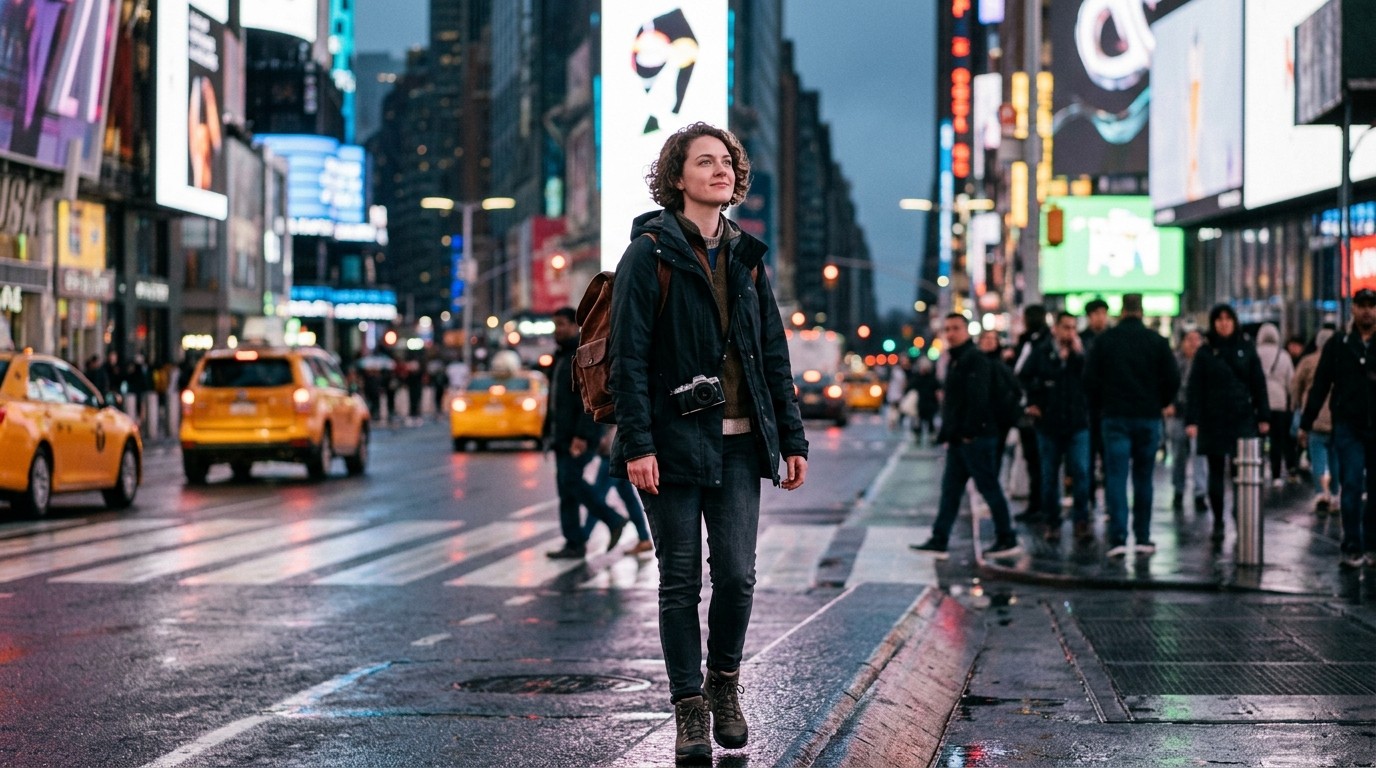
When you travel with someone else, every decision becomes a negotiation.
Where should we eat?
Which museum should we visit?
How early should we wake up?
Should we take the subway or walk?
Should we stay longer?
Solo travel removes that friction.
This does not mean every decision becomes easy. Instead, you develop decision-making confidence.
You learn how to navigate unfamiliar environments, recover from mistakes, and trust your judgment.
That is one reason Solo Travel New York City can feel transformative even when the itinerary itself looks simple.
Understanding New York City Before You Arrive
New York City is composed of five boroughs:
- Manhattan
- Brooklyn
- Queens
- The Bronx
- Staten Island
Most first-time visitors spend substantial time in Manhattan, but the city’s personality changes dramatically when you cross into the other boroughs.
Manhattan is dense, walkable in many areas, and packed with iconic attractions.
Brooklyn offers neighborhoods, waterfront views, restaurants, parks, arts, and a different pace.
Queens is exceptionally diverse and offers food, museums, parks, and neighborhood experiences that many first-time tourists overlook.
The Bronx has cultural attractions, parks, sports, gardens, and distinctive neighborhoods.
Staten Island provides a slower atmosphere and the famous ferry experience.
A strong Solo Travel New York City itinerary therefore should not treat Manhattan as the entire city.
Manhattan: The Easiest Starting Point
For a first solo trip, Manhattan provides an excellent introduction.
You can divide it into manageable zones rather than trying to see everything at once.
Lower Manhattan
Start around:
- Financial District
- Wall Street
- Battery Park
- 9/11 Memorial area
- SoHo
- Chinatown
- Little Italy
- Greenwich Village
This part of the city is ideal for walking.
You can begin near the southern tip of Manhattan and gradually move north through different neighborhoods.
The visual transformation is fascinating.
Historic streets become modern financial towers. Commercial districts become residential blocks. Chinatown transitions into SoHo. Downtown architecture changes every few minutes.
This makes walking one of the most rewarding activities for Solo Travel New York City.
Midtown Manhattan
Midtown contains many of the city’s most recognizable landmarks.
Consider:
- Times Square
- Rockefeller Center
- St. Patrick’s Cathedral
- Fifth Avenue
- Grand Central Terminal
- Bryant Park
- New York Public Library
- Empire State Building
Midtown can feel chaotic, particularly around Times Square.
Do not feel obligated to spend hours there.
Visit it, experience the spectacle, take your photos, and then move toward quieter streets.
Upper Manhattan
Upper Manhattan provides a different experience.
Central Park becomes the obvious centerpiece.
You can explore:
- The Mall
- Bethesda Terrace
- Bow Bridge
- The Reservoir
- Conservatory Garden
- Museum Mile
The Upper West Side and Upper East Side also provide excellent opportunities to experience residential Manhattan.
Central Park: Your Solo Travel Playground
Central Park is one of the easiest places to enjoy alone.
You can walk without needing a fixed itinerary.
Bring headphones, a camera, a book, or simply your curiosity.
Instead of trying to see every attraction, select a few areas and wander between them.
Morning is particularly appealing because the park can feel calmer before the city reaches its full daytime intensity.
For Solo Travel New York City, Central Park also provides something valuable: breathing space.
After spending hours among skyscrapers, traffic, advertisements, and crowds, a large green landscape can reset your attention.
Exploring Brooklyn Alone
Brooklyn deserves more than a quick bridge photo.
Start around Brooklyn Heights and Brooklyn Bridge Park.
The waterfront provides excellent views of Manhattan, especially around sunset.
Then consider exploring:
- DUMBO
- Cobble Hill
- Carroll Gardens
- Williamsburg
- Park Slope
- Prospect Heights
- Prospect Park
Brooklyn is especially enjoyable for travelers who prefer neighborhoods rather than landmark collecting.
You can spend an afternoon walking, stopping for coffee, browsing shops, eating lunch, and photographing architecture.
This slower approach makes Solo Travel New York City feel less like a checklist and more like actual travel.
The Brooklyn Bridge Strategy
The Brooklyn Bridge is one of the city’s most photographed locations.
Timing matters.
If you want photographs without the heaviest crowds, consider an early morning start.
If you want atmosphere, sunset offers dramatic light but typically brings more people.
Walk from Manhattan toward Brooklyn if you want the skyline to appear directly ahead.
Once you reach Brooklyn, continue toward Brooklyn Bridge Park rather than immediately returning.
That creates a more complete experience.
Queens : The Borough Food Travelers Should Notice
Queens is one of the strongest choices for travelers interested in food and cultural diversity.
Instead of only searching for famous restaurants, explore neighborhood food corridors.
Depending on your interests, you can look for:
- Asian cuisines
- South Asian food
- Latin American food
- Middle Eastern dishes
- Greek specialties
- Bakeries
- Street food
- International markets
Eating alone is often easier in New York than travelers expect.
Counter seating, casual restaurants, cafés, food halls, and bakeries are all naturally compatible with solo dining.
This is another reason Solo Travel New York City can be surprisingly comfortable.
Museums for Solo Travelers
Museums are almost perfect solo activities.
You control the pace.
You do not need to explain why you want to spend forty minutes in one room.
You can skip exhibits that do not interest you.
And you can leave whenever your attention starts fading.
Consider creating a museum strategy instead of attempting multiple huge institutions in one day.
Choose one major museum and combine it with nearby neighborhoods.
For example:
Morning: Museum
Afternoon: Neighborhood walk
Late afternoon: Café
Evening: Restaurant or performance
This gives your brain variety.
A Current Museum Opportunity
Travelers visiting in 2026 have another interesting option. NYC Tourism reported that MoMA PS1 began offering free admission to all visitors on January 1, 2026, with the free-admission policy planned for three years.
That makes Long Island City particularly interesting for budget-conscious travelers.
The larger lesson is to check official attraction websites shortly before your trip because admission policies, exhibitions, and schedules change.
Broadway and Entertainment Alone
Many travelers hesitate to attend Broadway shows alone.
There is no reason to.
Once the performance begins, everyone is watching the stage.
Solo travelers can sometimes benefit from single-seat availability, although availability varies by show and date.
If Broadway is outside your budget, consider other performances:
- Off-Broadway
- Comedy
- Jazz
- Live music
- Dance
- Theater
- Cultural performances
New York’s entertainment ecosystem means your evening does not need to revolve around one expensive attraction.
Solo Dining Without Feeling Awkward
One of the most important skills for Solo Travel New York City is becoming comfortable eating alone.
Start with low-pressure environments.
Good solo dining choices
- Café counters
- Bakeries
- Food halls
- Casual restaurants
- Pizza shops
- Diners
- Sushi counters
- Bar seating at restaurants
You can also use lunch as the time to experiment with more ambitious restaurants.
Dinner can then be casual.
Or reverse the strategy.
There is no correct formula.
The important psychological trick is to stop treating eating alone as something that needs justification.
You are simply eating.
Neighborhood Cafés and People Watching
New York is excellent for people watching.
Choose a café near a neighborhood you want to explore.
Order something simple.
Sit near a window.
Put your phone away for twenty minutes.
Watch the city.
This sounds insignificant, but these quiet moments often become some of the strongest memories from Solo Travel New York City.
Travel does not have to mean constant movement.
Sometimes experiencing a city means observing it.
Using the NYC Subway Like a Pro
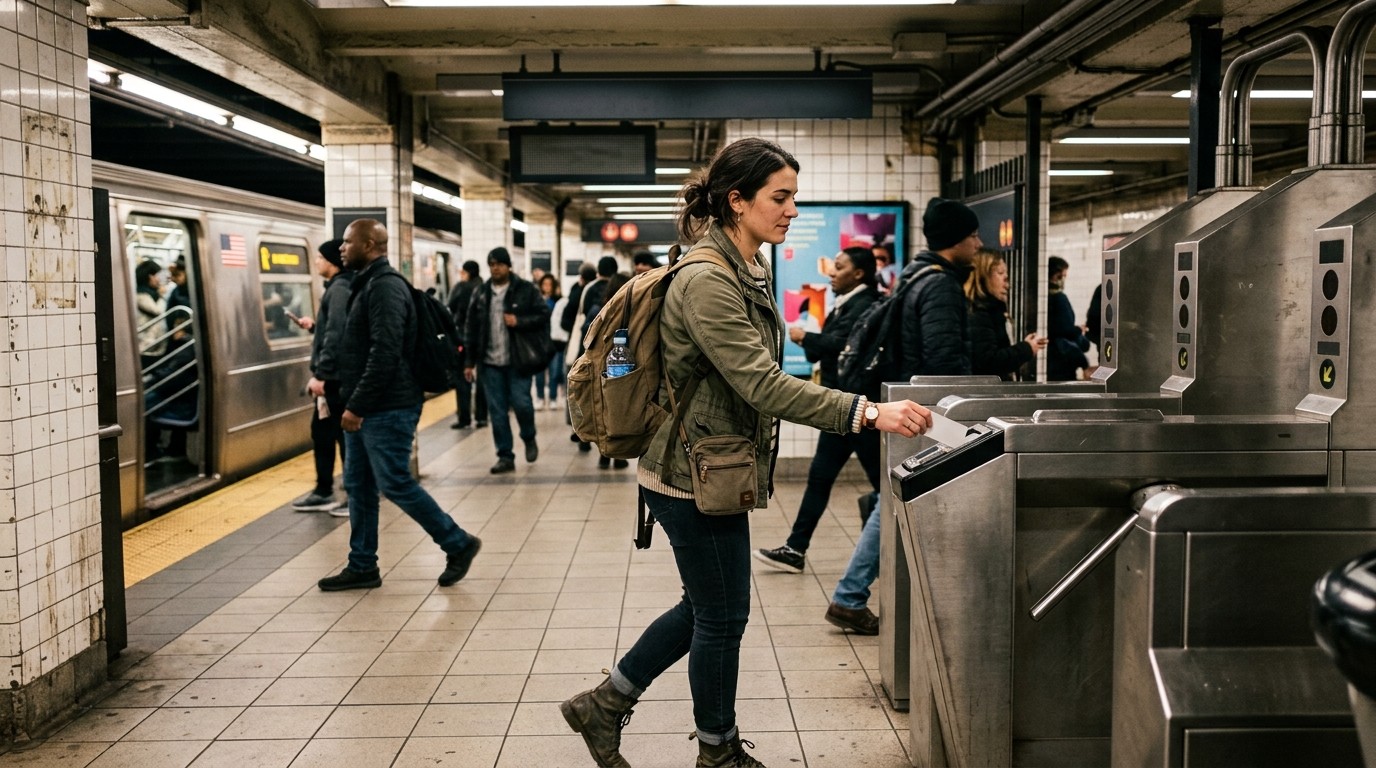
The subway is one of your most valuable tools.
For 2026, the MTA approved a base fare increase to $3.00 for subway and local bus service beginning January 4, 2026, and OMNY is replacing MetroCard as the payment system.
Check current MTA information before traveling because fares and policies can change.
The subway becomes easier when you stop trying to memorize the entire network.
Instead, understand three concepts:
- Your current station
- Your destination station
- The direction of travel
Use a reliable navigation app and check the train’s direction before entering.
Subway etiquette
Do not block the doors.
Move into the train when possible.
Let people exit before entering.
Avoid stopping directly at station entrances.
Keep your belongings secure.
If you miss your train, do not panic.
Another one will usually come.
Walking Versus Subway
One of the biggest mistakes first-time visitors make is assuming every trip requires transportation.
New York is extremely walkable in many areas.
If two destinations are fifteen or twenty minutes apart, walking may actually be more enjoyable.
Walking gives you:
- Architecture
- Street photography
- Unexpected shops
- Neighborhood transitions
- Public art
- Local restaurants
- People watching
For Solo Travel New York City, walking is not simply transportation.
It is part of the experience.
A Practical Daily Rhythm
A good solo day might look like this:
8:00 AM: Breakfast
9:00 AM: Major attraction
12:00 PM: Neighborhood walk
1:30 PM: Lunch
3:00 PM: Flexible exploration
5:00 PM: Rest
7:00 PM: Dinner
9:00 PM: Show, viewpoint, or relaxed evening
Notice the rest period.
It matters.
Trying to remain outside from 8 AM until midnight every day can turn an exciting trip into physical exhaustion.
Accommodation Strategy
Where you stay dramatically affects the quality of your solo trip.
You should prioritize:
- Convenient transportation
- Well-reviewed accommodation
- A location that matches your itinerary
- Clear check-in procedures
- Reliable communication
- Reasonable walking access
Do not choose accommodation solely because it has the lowest nightly price.
A cheaper room that requires long, complicated transportation every day can cost you time and energy.
New York City also warns visitors about illegal short-term rentals and recommends contacting 311 if a visitor encounters problems involving suspected illegal rental activity.
For solo travelers, booking legitimate accommodation is particularly important because you have fewer people available to help if something goes wrong.
Choosing the Best Neighborhood to Stay
Midtown
Best for first-time convenience.
Advantages:
- Central location
- Many attractions
- Strong transportation access
- Easy access to theaters
Disadvantage:
- Can feel crowded and commercial.
Greenwich Village
Best for:
- Restaurants
- Walking
- Nightlife
- Historic atmosphere
Lower Manhattan
Best for:
- Downtown sightseeing
- Financial District
- Waterfront
- Brooklyn Bridge access
Upper West Side
Best for:
- Central Park
- Residential atmosphere
- Museums
- Relaxed evenings
Brooklyn
Best for:
- Neighborhood atmosphere
- Food
- Waterfront views
- More local-feeling experiences
Solo Travel New York City Safety Basics
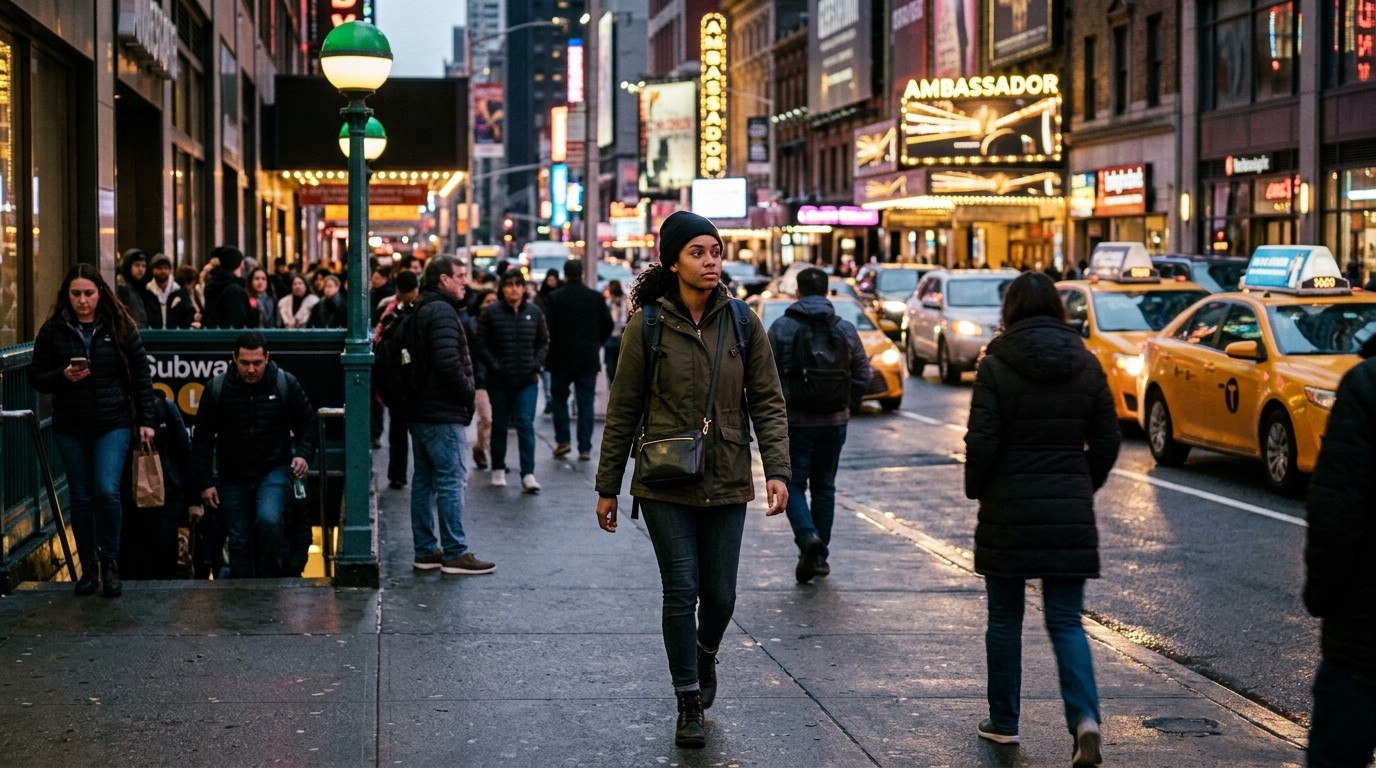
New York is a huge city, so common-sense awareness matters.
Keep your phone and wallet secure in crowded places.
Do not display expensive electronics unnecessarily.
Be cautious with strangers who aggressively approach you with unsolicited offers.
If something feels wrong, leave.
Do not prioritize politeness over personal comfort.
You are allowed to say no.
You are allowed to walk away.
You are allowed to change transportation plans.
You are allowed to return to your hotel.
That mindset is particularly useful for Solo Travel New York City because you are responsible for your own boundaries.
Emergency Information
For emergencies involving police, fire, or medical assistance, New York City directs people to call 911. The city also identifies 311 as the primary service for non-emergency government information and services.
If you cannot safely make a voice call, NYC states that Text-to-911 is available in the five boroughs, although calling 911 is preferred when possible.
Save important information before your trip rather than searching for it during an emergency.
Avoiding Tourist Traps
Not every expensive experience is a scam.
But some tourist-oriented businesses charge heavily for experiences that offer limited value.
Before paying, ask:
- What exactly is included?
- Is the price per person?
- Are there additional fees?
- How long does it last?
- Is the provider reputable?
- Are there official alternatives?
This is especially important around major tourist zones.
You do not need to buy an experience simply because someone tells you it is essential.
How to Save Money
New York can be expensive, but you do not need an unlimited budget.
NYC Tourism maintains a dedicated budget resource highlighting free and affordable activities throughout all five boroughs. Its current information notes more than 115 cultural attractions and venues offering free or suggested admission either year-round or during selected periods.
That means budget travel can be built into the itinerary rather than treated as an emergency measure.
Free or low-cost ideas
- Walk Central Park
- Walk across Brooklyn Bridge
- Explore neighborhoods
- Visit public parks
- Ride the Staten Island Ferry
- Explore public markets
- Photograph architecture
- Attend free cultural programming
- Visit attractions during free or pay-what-you-wish periods
The Staten Island Ferry
The Staten Island Ferry is particularly useful for solo travelers because it provides a scenic experience without requiring a complicated tour format.
NYC Tourism has highlighted the ferry as a free activity in its visitor recommendations.
It is an excellent example of how Solo Travel New York City can be affordable without feeling cheap.
You can simply board, enjoy the ride, photograph the skyline, and return.
A Seven-Day Solo New York Itinerary
Day 1: Arrival and Orientation
Keep your first day light.
Check in.
Walk around your neighborhood.
Find a grocery store or pharmacy.
Eat somewhere casual.
Do not schedule a major attraction immediately after a long flight.
Your goal is to understand your surroundings.
Day 2: Central Park and Museums
Start early.
Explore Central Park.
Have lunch nearby.
Visit one museum.
Spend the evening in the Upper West Side or Upper East Side.
Day 3: Lower Manhattan
Explore:
- Financial District
- Wall Street
- Battery Park
- 9/11 Memorial area
- Chinatown
- SoHo
Take your time.
This is a strong walking day.
Day 4: Brooklyn
Walk Brooklyn Bridge.
Explore DUMBO.
Spend time in Brooklyn Bridge Park.
Continue toward Brooklyn Heights.
Have dinner in Brooklyn.
Day 5: Midtown
Visit:
- Rockefeller Center
- Fifth Avenue
- Grand Central
- Bryant Park
- New York Public Library
Add a show if your budget allows.
Day 6: Queens
Explore a neighborhood.
Choose a museum or food destination.
Spend the afternoon somewhere less tourist-heavy.
Return to Manhattan in the evening.
Day 7: Flexible Favorites
Do not create a fixed itinerary.
Return to your favorite neighborhood.
Shop.
Photograph.
Eat.
Relax.
A flexible final day is one of the smartest elements of Solo Travel New York City.
A Three-Day Version
If you only have three days, simplify.
Day 1
Midtown + Central Park.
Day 2
Lower Manhattan + Brooklyn.
Day 3
Museum + neighborhood exploration + evening entertainment.
Do not attempt to see every famous attraction.
Choose experiences that represent the kind of traveler you are.
A Ten-Day Version
With ten days, you can go much deeper.
Add:
- Queens
- The Bronx
- Staten Island
- Multiple museums
- Neighborhood food tours
- Day trip possibilities
- More relaxed mornings
- Multiple performances
- Shopping days
- Photography walks
The additional time allows Solo Travel New York City to become less about sightseeing and more about living temporarily inside the city’s rhythm.
When to Visit
There is no single perfect season.
Spring
Pros:
- Pleasant walking weather
- Parks become attractive
- Outdoor activities return
Cons:
- Variable weather
Summer
Pros:
- Long daylight
- Outdoor events
- Waterfront activities
Cons:
- Heat
- Humidity
- Large crowds
Autumn
Pros:
- Comfortable temperatures
- Beautiful foliage
- Strong walking conditions
Cons:
- Popular travel period
Winter
Pros:
- Potentially lower accommodation prices
- Holiday atmosphere
- Museums and indoor activities
Cons:
- Cold
- Shorter daylight
The best season depends on your priorities.
What to Pack
Do not overpack.
New York rewards mobility.
Bring:
- Comfortable walking shoes
- Lightweight layers
- Weather protection
- Portable charger
- Secure day bag
- Reusable water bottle
- Basic medications
- Copies of important documents
- Comfortable clothing
Your shoes are particularly important.
A beautiful outfit will not save your feet after 20,000 steps.
The Psychology of Solo Confidence
The first day may feel strange.
You might eat alone and feel self-conscious.
You might hesitate before entering a restaurant.
You might worry about getting on the wrong train.
Then something changes.
You successfully navigate the subway.
You find your restaurant.
You walk through a neighborhood alone.
You realize nobody is judging you.
Your confidence increases.
This is one of the hidden rewards of Solo Travel New York City.
The city becomes a practical classroom for independence.
Connecting With People
Traveling alone does not mean refusing social interaction.
You can create opportunities without sacrificing independence.
Consider:
- Walking tours
- Food tours
- Group classes
- Museum events
- Live music
- Hostels with social spaces
- Guided day trips
- Cultural events
- Fitness classes
The best approach is optional connection.
Meet people when you want.
Retreat when you need quiet.
That balance makes solo travel sustainable.
Comparing New York With Other Solo Destinations
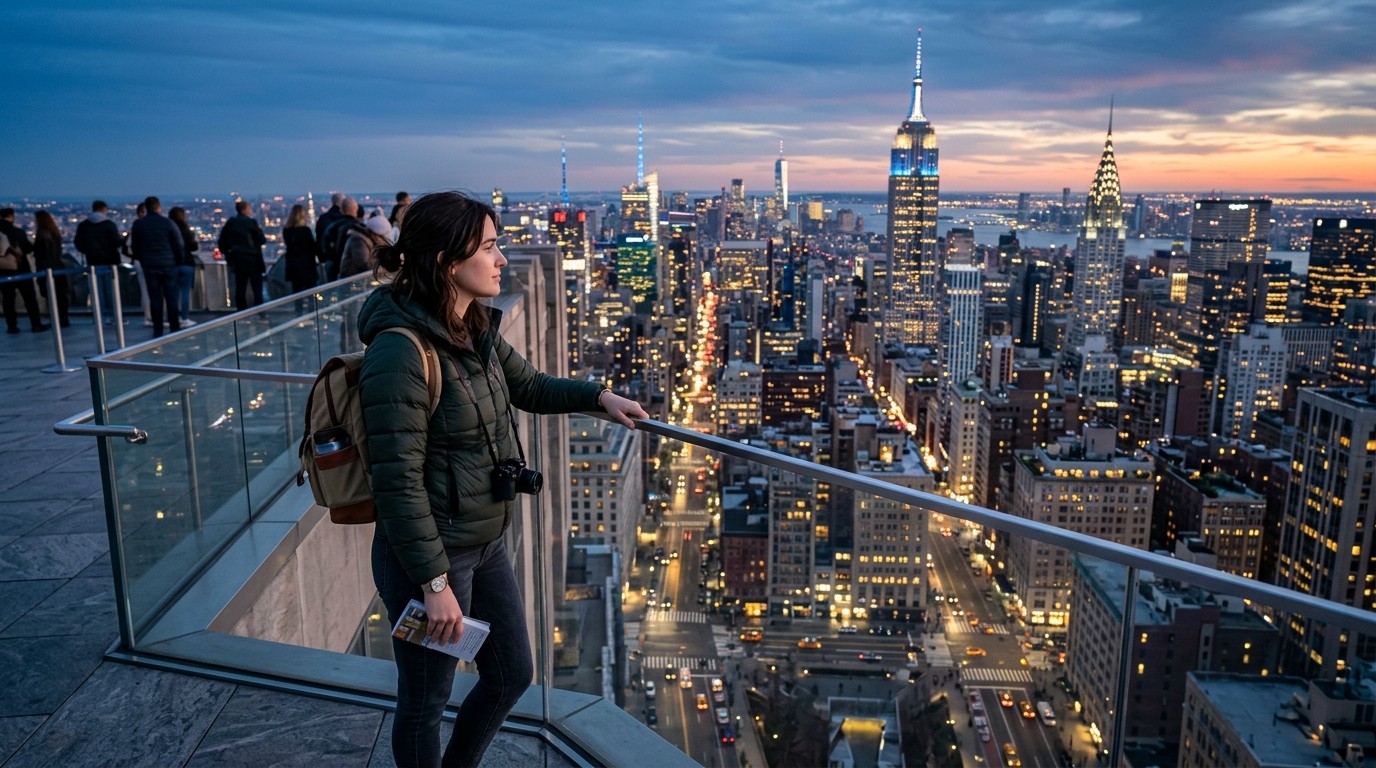
Travelers interested in USA Solo Travel often compare New York with island and outdoor destinations.
For example, Solo Travel Hawaii offers a completely different rhythm.
New York emphasizes density, culture, food, architecture, entertainment, and urban movement.
Hawaiʻi emphasizes beaches, mountains, ocean activities, scenic drives, and slower days.
Neither is universally better.
They simply satisfy different psychological needs.
Likewise, an international adventure such as the Inca Trail Trek is fundamentally different from an urban trip because the focus shifts toward physical challenge, landscape, and trekking.
A mountain-focused European experience such as Dolomites Hiking creates another contrast through alpine scenery and hiking culture.
These comparisons make one thing clear: Solo Travel New York City is strongest when you want variety and independence within a highly connected urban environment.
How to Explore Like a Pro
Professionals do not necessarily visit more attractions.
They reduce wasted movement.
Instead of crossing Manhattan repeatedly, group nearby experiences.
Instead of eating wherever you happen to be, research a few options around your route.
Instead of booking every hour, protect free time.
Instead of chasing viral locations, look for experiences that match your interests.
Instead of treating every famous landmark as mandatory, ask whether you genuinely care about it.
This is the difference between a busy itinerary and a smart itinerary.
The Perfect Solo Travel Mindset
Do not try to prove anything.
You do not need to wake up at 5 AM every day.
You do not need to visit twenty attractions.
You do not need to spend a fortune.
You do not need to photograph everything.
You do not need to make friends every night.
You simply need to create a trip that feels meaningful to you.
That is the real philosophy behind Solo Travel New York City.
Conclusion
Solo Travel New York City is ultimately about freedom, confidence, and curiosity. The city’s neighborhoods, museums, food culture, parks, entertainment, and transportation network make it possible to build an itinerary around almost any interest. The smartest approach is to stay in a practical location, group nearby attractions, walk whenever possible, use public transportation confidently, protect your budget, and leave space for spontaneous discoveries. Safety should remain a priority, but it should not prevent you from enjoying the city’s energy. Whether you have three days or ten, New York rewards travelers who slow down enough to observe rather than simply collect landmarks. Explore independently, trust your judgment, and let the city surprise you.
Frequently Asked Questions (FAQ)
1. Is Solo Travel New York City good for first-time solo travelers?
Yes. New York can be an excellent first solo destination because there are extensive transportation options, countless attractions, restaurants, tours, museums, and activities designed for individual visitors.
2. How many days are enough for New York City?
Three days can cover major highlights, while five to seven days provide a much more comfortable experience. Ten days allows deeper neighborhood exploration.
3. Is New York City safe for solo travelers?
Millions of people visit New York each year, but travelers should still use normal urban safety practices, stay aware of their surroundings, secure valuables, and avoid unnecessary risks.
4. Is the subway easy for tourists?
It can take a little practice, but navigation apps and the MTA’s current information make the system easier to understand. In 2026, the MTA is completing its transition from MetroCard to OMNY.
5. How much does the NYC subway cost?
The MTA’s 2026 fare information lists the base subway and local bus fare at $3.00. Check the MTA before your trip for the latest fare and payment information.
6. Can I eat alone in New York restaurants?
Absolutely. Counter seating, cafés, diners, food halls, bakeries, and casual restaurants are particularly comfortable for solo diners.
7. What is the best area to stay for a first solo trip?
Midtown can be convenient for first-time visitors because of its central location, while Greenwich Village, Lower Manhattan, the Upper West Side, and parts of Brooklyn offer different experiences.
8. What are the best free things to do in New York?
Walking Central Park, exploring neighborhoods, crossing Brooklyn Bridge, visiting public spaces, and riding the Staten Island Ferry are excellent low-cost options. NYC Tourism also maintains current information about free and affordable activities.
9. What should I do if I have an emergency?
Call 911 for police, fire, or medical emergencies. NYC identifies 311 as its main non-emergency government information service.
10. How can I make Solo Travel New York City more enjoyable?
Avoid overplanning. Group attractions by neighborhood, leave free time, choose accommodation near useful transportation, wear comfortable shoes, try local food, and allow yourself to explore without constantly following a checklist.



Leave a Reply