

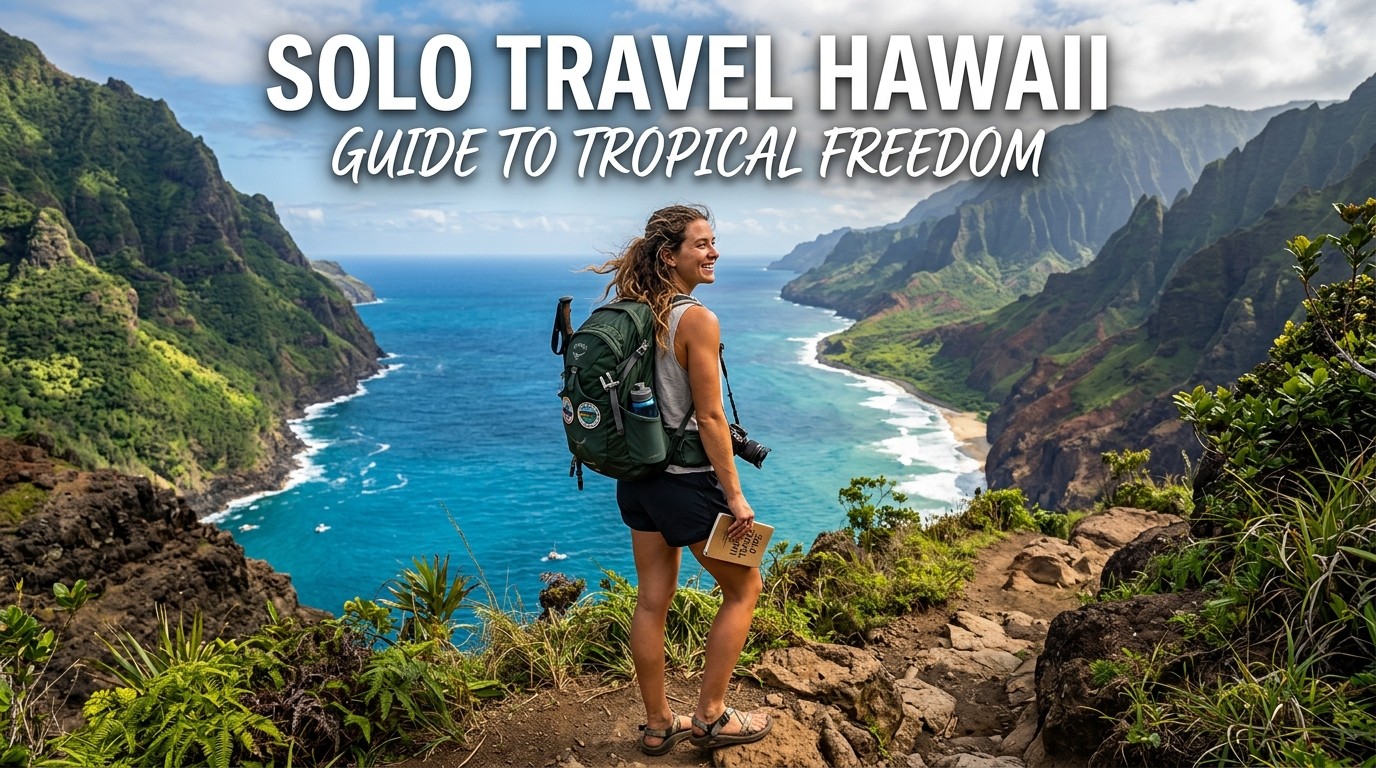
Solo Travel Hawaii offers a practical path to tropical independence, combining island adventures, cultural respect, smart safety habits, flexible itineraries, and meaningful moments without a travel companion.
Hawaii can look complicated on a map, but it becomes surprisingly approachable when you stop treating the islands as one giant destination. The real pleasure of solo travel is choosing your own pace: a dawn walk, a long coffee, an unexpected viewpoint, or an afternoon when the only plan is the ocean. Solo Travel Hawaii works best when freedom is balanced with preparation rather than rigid scheduling.
That balance is the heart of Solo Travel Hawaii.
The islands also reward travelers who mix iconic places with slower local experiences. Oahu can give you a city base, beaches, museums, food, and easy opportunities to meet people. Maui leans into scenic drives, beaches, volcanic landscapes, and a relaxed rhythm. Kauai is especially attractive to hikers and nature lovers, while the Island of Hawaii brings expansive landscapes and volcanic geology. Hawaii’s official visitor site identifies six major islands, each with its own character, so your first decision is really about choosing an island personality that matches your travel style.
Small choices can transform Solo Travel Hawaii into something personal.
A useful mindset is to think of Solo Travel Hawaii as a freedom project rather than a sightseeing race. You are not trying to prove that you can see everything. You are designing days that feel good alone. That distinction matters because solo travelers often overpack itineraries to justify the trip, then discover that constant driving, reservations, and early starts leave little room for curiosity.
Preparation gives Solo Travel Hawaii more room to breathe.
Choosing the Right Hawaiian Island
Oahu : Best for First-Time Solo Travelers
Oahu is the easiest island to recommend for many first-time solo visitors because Honolulu provides a strong urban base while beaches, trails, cultural sites, and day trips are within reach. The official tourism site highlights Waikiki, Diamond Head, Hanauma Bay, Pearl Harbor, ʻIolani Palace, North Shore surf culture, and Honolulu’s dining and nightlife. It also notes that rideshares, taxis, public transportation, bikeshare, and the Waikiki Trolley can cover many urban needs, while a rental car becomes more useful for trips beyond Honolulu.
These details make Solo Travel Hawaii easier to enjoy.
For Solo Travel Hawaii, that combination can reduce a common solo-travel problem: feeling isolated because you selected a destination where a car is necessary for almost everything. Oahu gives you choices. You can spend a morning walking around Waikiki, visit a museum in the afternoon, eat dinner in a busy neighborhood, and still have the option of a guided excursion the next day.
That approach keeps Solo Travel Hawaii flexible and calm.
Oahu is also a strong choice for travelers who want a gradual introduction to independent travel. You can make the days highly structured or leave several hours open. The island supports both social and private experiences, which helps you manage the natural emotional rhythm of traveling alone.
Good pacing makes Solo Travel Hawaii far more rewarding.
Maui : Best for Scenic Freedom
Maui suits travelers who enjoy scenic drives, beaches, outdoor activities, and a slower resort-town rhythm. The official visitor site highlights Haleakala, ʻĪao Valley, the Hāna Highway, snorkeling, coastal scenery, and beaches. It describes spring and fall as particularly comfortable periods for visiting, while emphasizing Maui’s mix of adventure and tranquility.
The goal is simple: enjoy Solo Travel Hawaii fully.
This is where Solo Travel Hawaii feels effortless.
For Solo Travel Hawaii, Maui is excellent when your ideal day includes one major experience followed by plenty of breathing room. Instead of stacking five attractions into one day, you might choose a coastal drive, stop for a meal, watch the light change, and return to your accommodation before dinner.
Smart planning lets Solo Travel Hawaii stay spontaneous.
Maui also teaches an important lesson about solo travel: transportation can shape your experience as much as the attraction itself. A rental car gives you flexibility, but it also means paying attention to fatigue, parking, weather, road conditions, and the temptation to keep driving because there is always another viewpoint.
That mindset can make Solo Travel Hawaii feel lighter.
Kauai : Best for Nature and Hiking
Kauai is the choice for travelers who want dramatic landscapes, hiking, waterfalls, coastal scenery, and a stronger sense of immersion in nature. The official visitor site describes the Nāpali Coast and Waimea Canyon as major draws and highlights Hanalei Bay, scenic drives, snorkeling, and boat tours.
For independent travelers, Solo Travel Hawaii rewards curiosity.
Solo Travel Hawaii on Kauai requires a more safety-conscious mindset because remote landscapes can be less forgiving. State guidance recommends planning your route, telling someone where you are going, checking the weather, carrying water and basic first-aid supplies, wearing shoes with traction, staying on signed trails, and returning before dark.
With patience, Solo Travel Hawaii becomes deeply memorable.
The reward is enormous. A solo day on Kauai can feel less like a vacation checklist and more like a reset. You may spend hours watching clouds move across green mountains, walking a short trail, eating something simple, and realizing that nobody is waiting for you to hurry.
These habits help Solo Travel Hawaii feel secure.
Island of Hawaii : Best for Big Landscapes
The Island of Hawaii, often called the Big Island, is compelling for travelers interested in volcanoes, black-sand beaches, astronomy, waterfalls, and long scenic drives. The larger scale can make a solo trip feel adventurous, but it also means you need to plan driving distances carefully.
Intentional choices make Solo Travel Hawaii less stressful.
For Solo Travel Hawaii, the Big Island works best when you choose one geographic area as a base instead of trying to cross the island every day. Hilo and Kona offer different atmospheres, while Hawaiʻi Volcanoes National Park can become the centerpiece of a nature-focused itinerary.
Leave space, and Solo Travel Hawaii becomes more authentic.
The biggest psychological advantage here is space. When you travel alone, wide landscapes can make the trip feel transformative because you have fewer distractions and more time to process what you are seeing.
Thoughtful planning keeps Solo Travel Hawaii pleasantly flexible.
How Long Should a Solo Hawaii Trip Be?
A three-day trip can work, but it is better for a focused island escape than a broad exploration. Five to seven days gives you enough time to settle into an island rhythm. Ten to fourteen days can justify adding a second island, provided you accept that inter-island travel consumes time.
That is what makes Solo Travel Hawaii feel free.
For Solo Travel Hawaii, the sweet spot for many travelers is five to eight nights on one island. Staying put reduces hotel changes, packing, airport transfers, rental-car swaps, and decision fatigue. Solo travel often feels more luxurious when you have fewer logistics.
Better preparation allows Solo Travel Hawaii to feel effortless.
A simple framework looks like this:
Your priorities should shape Solo Travel Hawaii.
| Trip length | Recommended approach | Why it works |
|---|---|---|
| 3–4 days | One island, one base | Minimum logistics |
| 5–7 days | One island, flexible itinerary | Best balance of freedom and depth |
| 8–10 days | One island deeply or two lightly | Enough time for variety |
| 11–14 days | Two islands | Better for travelers who enjoy moving |
| 2+ weeks | Two or three islands | More room for regional exploration |
Personal rhythm matters throughout Solo Travel Hawaii.
Do not confuse more islands with a better trip. Inter-island flights are relatively short, but airport time, rental cars, hotel check-in, and unpacking can consume much of a day. The official visitor site notes that flights between the major islands are generally short, but recommends arriving at least 90 minutes before inter-island flights.
This is where Solo Travel Hawaii feels effortless.
The Best Time for Solo Travel
Hawaii is a year-round destination, but your ideal season depends on what you want to do. Oahu’s official travel guidance notes that spring and fall can bring comfortable temperatures, good ocean conditions, and fewer crowds, while winter produces bigger surf on the North Shore and summer tends to have warmer ocean water.
That balance is the heart of Solo Travel Hawaii.
For Solo Travel Hawaii, shoulder seasons can be especially appealing because a solo traveler benefits from flexibility. You may find it easier to enter restaurants, book selected tours, move through attractions, and enjoy scenic areas without peak-season pressure.
Small choices can transform Solo Travel Hawaii into something personal.
Weather should always influence outdoor decisions. Hawaii can shift from sun to rain quickly, especially in mountainous and windward areas. State park guidance warns that clear mornings can be followed by rain and wind and that flash floods are a serious possibility in narrow gulches.
Preparation gives Solo Travel Hawaii more room to breathe.
The best solo itinerary therefore has a “weather switch.” If your hiking day becomes wet or windy, move the hike rather than forcing it. Use that day for a museum, coffee shop, cultural attraction, shopping, food tour, or relaxed beach time in a safer location.
These details make Solo Travel Hawaii easier to enjoy.
Building a Solo-Friendly Daily Rhythm
The biggest mistake in planning Solo Travel Hawaii is filling every hour before you arrive. Build days around anchors instead.
That approach keeps Solo Travel Hawaii flexible and calm.
Choose one major activity, one food experience, and one flexible block. For example, your anchor might be a hike, your food experience might be a local lunch, and the flexible block might be an unplanned afternoon near the beach.
Good pacing makes Solo Travel Hawaii far more rewarding.
This structure protects you from two opposite problems. The first is boredom caused by having no idea what to do. The second is exhaustion caused by chasing reservations from dawn to night.
The goal is simple: enjoy Solo Travel Hawaii fully.
A strong solo day often follows this rhythm:
Smart planning lets Solo Travel Hawaii stay spontaneous.
Morning : Movement
Start early when possible, especially for outdoor activities. Morning light can be beautiful, temperatures may be gentler, and you have more daylight available if plans change.
That mindset can make Solo Travel Hawaii feel lighter.
Midday : Recovery
Eat, hydrate, cool down, and reduce driving. This is also a great time to write notes, edit photos, read, or simply sit somewhere scenic.
For independent travelers, Solo Travel Hawaii rewards curiosity.
Afternoon: Exploration
Choose a flexible experience such as a market, neighborhood walk, cultural site, beach, garden, or short trail.
With patience, Solo Travel Hawaii becomes deeply memorable.
Evening : Social or Slow
Solo Travel Hawaii does not mean every night needs to be social. One evening might be a food tour or group activity; another might be an early dinner and a quiet walk.
These habits help Solo Travel Hawaii feel secure.
Where Should Solo Travelers Stay?
Location matters more than hotel luxury when you are traveling alone. Choose a base that reduces friction. Ask yourself whether you can reach food, coffee, a beach, transport, and basic services without an exhausting commute.
Intentional choices make Solo Travel Hawaii less stressful.
On Oahu, Waikiki is convenient for travelers who prioritize walkability, restaurants, beaches, and access to activities. On Maui, South Maui and West Maui offer different mixes of beaches, resorts, and restaurants, while the island’s geography makes car access valuable for exploration.
Leave space, and Solo Travel Hawaii becomes more authentic.
For Solo Travel Hawaii, accommodations with a lively common area can make social connection easier without forcing interaction. Look for hostels, boutique properties, small hotels, or resorts that offer group activities, classes, or shared spaces.
Thoughtful planning keeps Solo Travel Hawaii pleasantly flexible.
You can also create your own social structure. Book one group activity early in the trip. A snorkel excursion, food tour, guided hike, surf lesson, cultural workshop, or photography walk gives you a natural way to meet people without the awkwardness of trying to start conversations from zero.
That is what makes Solo Travel Hawaii feel free.
Getting Around Without Stress
Transportation is one of the first things to solve because your mobility determines what “freedom” actually means. Oahu has more public transport and urban alternatives than the other major islands, while more remote exploration often benefits from a rental car.
Better preparation allows Solo Travel Hawaii to feel effortless.
For Solo Travel Hawaii, avoid renting a car simply because you think every visitor is supposed to rent one. If your itinerary is mostly Honolulu and Waikiki, you may pay for a vehicle you barely use. Conversely, if your plan includes remote viewpoints, trailheads, or long scenic drives, a car can be worth the cost.
Your priorities should shape Solo Travel Hawaii.
Before driving, check parking, road conditions, weather, fuel availability, and how much daylight remains. Build a conservative return time. Traveling alone means there is no second driver to share fatigue.
Personal rhythm matters throughout Solo Travel Hawaii.
Inter-Island Hopping
Flying between islands can add variety, but it should be intentional. The official visitor site lists approximate flight times from Honolulu of about 30 minutes to Kauai and Maui, and roughly 45 to 50 minutes to the Island of Hawaii, but airport logistics make the practical travel window much longer.
This is where Solo Travel Hawaii feels effortless.
Use inter-island travel when the second island offers a fundamentally different experience you genuinely want. Do not move just because an online itinerary says you should.
That balance is the heart of Solo Travel Hawaii.
Safety : The Solo Traveler’s Non-Negotiables
A beautiful setting can create false confidence. Hawaii is still a rugged collection of volcanic islands surrounded by powerful ocean conditions.
Small choices can transform Solo Travel Hawaii into something personal.
State hiking guidance recommends telling someone your route and expected return time, checking the forecast, carrying water and basic first aid, wearing appropriate traction, staying on signed and managed trails, and allowing enough time to return before dark.
Preparation gives Solo Travel Hawaii more room to breathe.
For Solo Travel Hawaii, make that routine automatic. Send your accommodation a message with your general plan, share your location with a trusted person, keep your phone charged, and carry a compact backup battery.
These details make Solo Travel Hawaii easier to enjoy.
The ocean deserves even more respect. Hawaii Ocean Safety recommends swimming at lifeguarded beaches, knowing your limits, following warning signs, staying alert to conditions, and swimming with a buddy. Strong currents can occur at any beach and may not always be obvious.
That approach keeps Solo Travel Hawaii flexible and calm.
That last point is critical: clear water does not mean calm water. A beach may look perfect in photographs while currents are unsafe.
Good pacing makes Solo Travel Hawaii far more rewarding.
Hiking Alone : How to Reduce the Risk
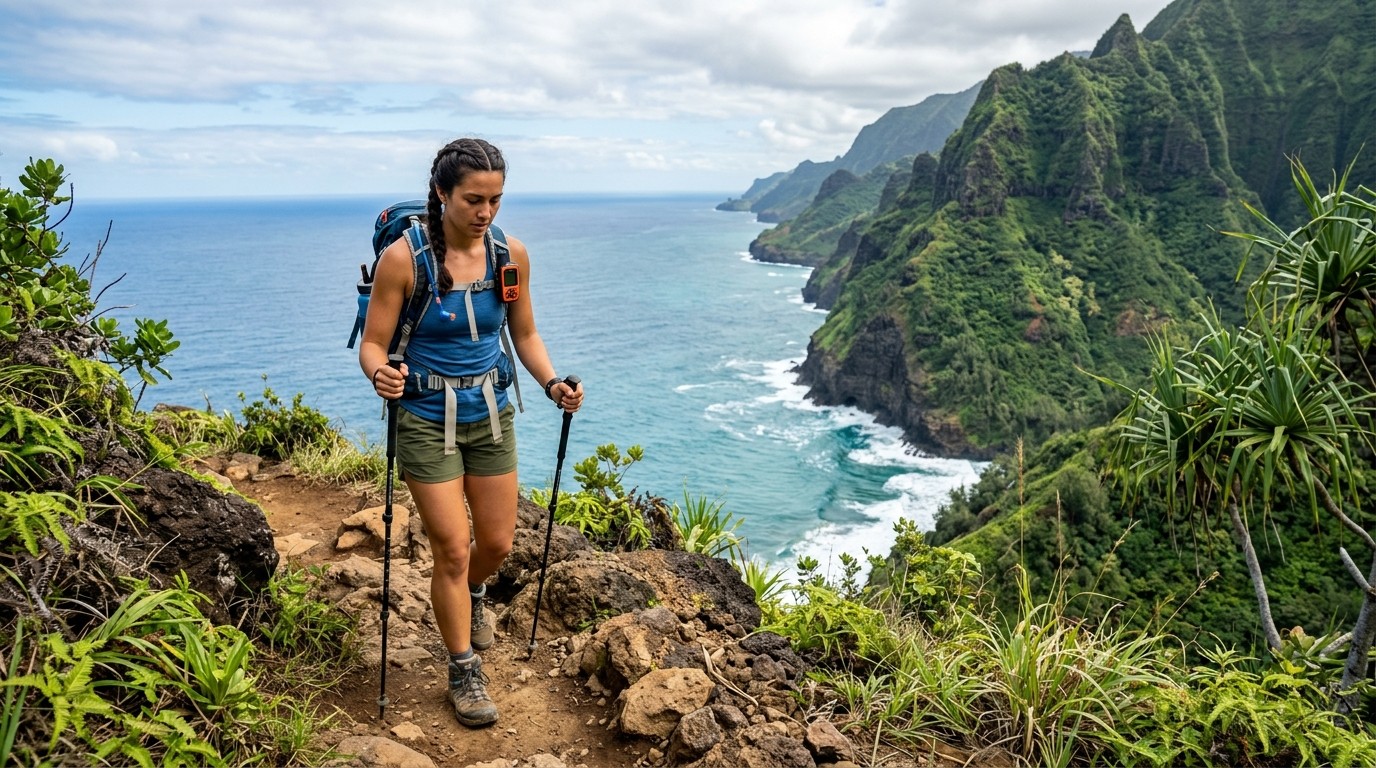
Solo hiking can be one of the most rewarding parts of Solo Travel Hawaii, but only if the route matches your experience.
The goal is simple: enjoy Solo Travel Hawaii fully.
Avoid choosing trails solely because they are viral. Instead, evaluate distance, elevation gain, terrain, weather exposure, route-finding difficulty, cell coverage, recent conditions, and your turnaround time.
Smart planning lets Solo Travel Hawaii stay spontaneous.
Hawaii’s State Parks advise hikers to stay on designated trails, carry appropriate equipment, assess terrain and weather, and allow enough time to finish before nightfall.
That mindset can make Solo Travel Hawaii feel lighter.
A Practical Solo Hiking Rule
Never let a beautiful view turn a moderate trail into an improvised scramble. If the trail becomes unclear, steep, muddy, exposed, or restricted, turn around.
For independent travelers, Solo Travel Hawaii rewards curiosity.
For Solo Travel Hawaii, “I turned back” is a successful outcome. The goal is not to reach every viewpoint; it is to return safely with energy left to enjoy the rest of the trip.
With patience, Solo Travel Hawaii becomes deeply memorable.
And never assume a trail remains open because an old blog says it is. Conditions can change. For example, current state information has shown changing access conditions on Kauai’s Kalalau Trail, demonstrating why official park notices should be checked immediately before departure.
These habits help Solo Travel Hawaii feel secure.
Haleakala Sunrise : A Solo Maui Classic
Haleakala is one of those experiences that can feel tailor-made for reflection. Watching daylight emerge above the summit is naturally contemplative, especially when you are not managing a group.
Intentional choices make Solo Travel Hawaii less stressful.
But planning matters. The National Park Service currently requires a sunrise reservation for summit access between 3:00 a.m. and 7:00 a.m. Reservations can be made in advance through Recreation.gov, with some inventory released 60 days ahead and another portion released 48 hours before the date.
Leave space, and Solo Travel Hawaii becomes more authentic.
For Solo Travel Hawaii, this is a good example of why checking official sources beats relying on memory. Rules change. Reservation windows change. Weather changes.
Thoughtful planning keeps Solo Travel Hawaii pleasantly flexible.
The summit can also be cold, windy, wet, and uncomfortable before dawn. The National Park Service notes that pre-dawn and post-dusk conditions can be wet, windy, and below freezing and that there is no food, clothing, or gas for sale inside the park.
That is what makes Solo Travel Hawaii feel free.
Bring layers, water, a charged phone, and enough time to drive carefully. Do not turn a sunrise reservation into a race against the clock.
Better preparation allows Solo Travel Hawaii to feel effortless.
Food and Dining Alone
Eating alone can feel uncomfortable at first, but Hawaii provides plenty of low-pressure food experiences. Counter-service restaurants, cafés, food halls, casual seafood spots, bakeries, markets, and tasting tours make solo dining natural.
Your priorities should shape Solo Travel Hawaii.
One psychological trick is to stop treating solo dining as a social performance. You do not need to look busy. You can watch the room, read, journal, or simply eat slowly.
For Solo Travel Hawaii, food can also be your bridge into local culture. Look beyond hotel dining rooms. Try regional specialties, visit farmers markets, ask knowledgeable servers for recommendations, and take a guided food walk where you can learn about ingredients and history.
Respect local customs and communities. Being a visitor means remembering that Hawaii is home, not merely a backdrop for content.
Cultural Respect and Responsible Travel
The quality of your Solo Travel Hawaii experience improves when you travel with curiosity rather than entitlement.
Learn a few Hawaiian place names and pronunciation basics. Understand that some places have cultural significance. Follow signs, closures, and restrictions. Do not enter areas simply because someone posted an unauthorized shortcut online.
Hawaii’s State Parks explicitly remind visitors that trails can pass through culturally significant areas and that travelers should follow official signs and avoid walking onto sacred sites or restoration areas.
Responsible travel can be practical too. Reduce single-use plastic, use refillable water bottles, respect wildlife, stay on trails, keep beaches clean, and support legitimate local businesses.
Maui’s official tourism guidance also promotes responsible travel and invites visitors to engage with mālama, a philosophy of caring for place.
How to Make Solo Travel Feel Less Lonely
Freedom and loneliness can exist in the same hour. That does not mean your trip is going badly.
Build small social touchpoints rather than forcing constant companionship. Join a group tour. Eat at a communal counter. Attend a cultural class. Chat with a guide. Stay somewhere with common areas. Message friends at home at a predictable time.
For Solo Travel Hawaii, these small connections create emotional anchors without taking away independence.
Also protect your alone time. A solo trip becomes frustrating when you spend every day trying to prove that you are having fun.
Take one deliberately quiet afternoon. Sit under shade. Listen to the ocean. Journal. Nap. Do nothing productive.
That is not wasted travel time. It is often the part you remember.
A Smart Pre-Departure Checklist
Three weeks before departure, confirm flights, accommodation, car reservations, and any high-demand activities.
One week before departure, review weather, park notices, trail conditions, transportation, and reservations.
The day before an outdoor activity, check official alerts again.
For Solo Travel Hawaii, that final check is more important than an old social-media post because trail, ocean, road, and park conditions can change quickly.
Save offline copies of your accommodation details, reservation confirmations, maps, and emergency contacts. Keep your phone and battery pack charged.
The Psychology of Tropical Freedom
The deeper attraction of solo island travel is not merely scenery. It is agency.
You decide when to wake up. You choose what to eat. You can change the plan without negotiating with anyone. You can spend three hours at one overlook if that is what the day needs.
That freedom can feel uncomfortable at first because shared travel provides automatic structure. Alone, you have to create your own.
For Solo Travel Hawaii, that becomes a skill. You learn to recognize when you need stimulation, when you need rest, when you should talk to someone, and when you should trust your judgment and leave.
You also discover a quieter form of confidence. Confidence is not believing that nothing will go wrong. It is knowing that you can respond thoughtfully when something does.
What Solo Hawaii Can Teach You About Independent Travel
Travelers who have already tried USA Solo Travel often appreciate how Hawaii shifts the challenge from navigating dense cities or long mainland distances toward ocean awareness, island geography, weather, and outdoor judgment.
Someone comfortable with Solo Travel New York City may already have confidence with dining alone, changing plans, and exploring without a companion, but Hawaii adds a stronger need for preparation around nature.
Global Travel develops a similar adaptability, especially the ability to respect different customs and adjust expectations rather than demanding familiar routines.
Even a mountain-focused experience such as Dolomites Hiking builds a useful lesson for Hawaii: scenery should never override trail conditions, weather, fatigue, or the limits of your own experience.
A calm schedule makes Solo Travel Hawaii spacious.
A calm schedule makes Solo Travel Hawaii spacious.
A calm schedule makes Solo Travel Hawaii spacious.
A thoughtful traveler leaves flexibility for weather and changing energy.
Good preparation keeps adventurous days enjoyable and manageable.
Conclusion
Solo Travel Hawaii is ultimately about choosing your own rhythm while respecting the power, culture, and beauty of the islands. Pick one island that matches your interests, build a flexible itinerary around a few meaningful experiences, and leave room for weather, rest, and spontaneous discovery. Prioritize trail and ocean-safety guidance, check reservations and park conditions before activities, and never treat popular destinations as guaranteed experiences. The most memorable solo trip is rarely the busiest. It is the one where you feel capable, present, curious, and free. Travel lightly, move thoughtfully, respect local communities, and let Hawaii become more than photographs.
Frequently Asked Questions (FAQ)
1. Is Hawaii good for solo travelers?
Yes. Hawaii offers a mix of cities, beaches, nature, cultural experiences, tours, and outdoor activities that can work well for independent travelers. Oahu is especially convenient for first-time solo visitors because Honolulu provides many transportation, dining, and activity options.
2. Which Hawaiian island is best for a first solo trip?
Oahu is usually the easiest starting point because you can combine Honolulu with beaches, hikes, cultural attractions, restaurants, and organized excursions. Maui is a strong alternative for travelers prioritizing scenic drives and outdoor relaxation.
3. Is Hawaii safe for someone traveling alone?
It can be, but solo travelers should take outdoor and ocean hazards seriously. Check conditions, stay on maintained trails, avoid risky improvisation, and use lifeguarded beaches when swimming. Hawaii Ocean Safety specifically advises visitors to know their limits and remain aware of ocean conditions.
4. Do I need a rental car?
Not always. On Oahu, travelers staying around Honolulu and Waikiki can rely more on public transit, rideshares, taxis, bikeshare, and trolleys, while trips outside the urban core may be easier with a car.
5. How many days are enough for solo Hawaii travel?
Five to seven days is a useful target for a one-island trip. Longer trips can justify adding another island, but moving between islands introduces additional airport, lodging, and transportation logistics.
6. Do I need a reservation for Haleakala sunrise?
Yes. The National Park Service currently requires a sunrise reservation for summit access between 3:00 a.m. and 7:00 a.m. Reservations are made through Recreation.gov, with availability released in advance.
7. Can I hike alone in Hawaii?
Solo hiking is possible, but route selection and preparation matter. Hawaii trail guidance recommends checking weather, telling someone your plans, carrying water and basic supplies, staying on designated trails, and returning before dark.
8. What should I pack for a solo Hawaii trip?
Prioritize versatile clothing, comfortable walking shoes, a light rain layer, sun protection, a daypack, reusable water bottle, phone battery, basic first aid, and secure storage for essentials. Add hiking equipment according to your planned terrain.
9. How can I avoid feeling lonely while traveling alone?
Create small opportunities for connection instead of trying to stay social all day. Group tours, food experiences, classes, hostels, hotel activities, and shared excursions can provide easy social contact while preserving independent time.
10. What is the biggest mistake solo travelers make in Hawaii?
Overplanning. A packed itinerary can turn tropical freedom into a logistics marathon. Choose a few high-value experiences, respect weather and safety conditions, and leave open time so the trip can breathe.



Leave a Reply