


Embarking on a Morocco road trip offers an immersive journey through vibrant cities, rugged mountains, vast deserts, and windswept coastlines. In today’s digital landscape, travelers are seeking authentic experiences that blend cultural immersion with responsible exploration. Whether you’re marveling at centuries-old medinas, sampling fragrant tagines, or watching the sunrise over golden dunes, a carefully crafted itinerary can transform your adventure into a seamless story. This year (2026), Morocco remains a top destination for adventurers craving diversity in scenery and heritage.
On this 10-day Morocco road trip, you’ll begin in the energetic heart of Marrakech, wind through the majestic High Atlas, traverse the Saharan Erg Chebbi, explore UNESCO-listed sites, and conclude beside the Atlantic surf. Along the way, engaging with local artisans, savoring traditional cuisine, and camping under starry skies will enrich your understanding of the kingdom’s unique tapestry. To help you plan, this guide outlines daily routes, essential tips, and recommended stops to ensure a memorable journey. Ready your camera, brush up on basic Arabic phrases, and embrace the unexpected turns of winding mountain passes and bustling souks. Let’s hit the road for a Morocco road trip unlike any other.
Planning Your Morocco Road Trip: Starting in Marrakech
Every successful Morocco road trip begins with meticulous planning in Marrakech. As soon as you land at Marrakech Menara Airport, you’ll sense the city’s pulse—vibrant street markets, ornate palaces, and bustling squares. Today, taxis and ride-sharing apps make airport transfers straightforward, but consider pre-booking a private car if you prefer a stress-free arrival according to U.S. travel advisories.
In today’s digital age, mobile navigation tools are indispensable. Download offline maps and establish Wi-Fi access points in local cafes. Riad accommodations in the medina offer an authentic ambiance with courtyard gardens and rooftop terraces overlooking Jemaa el-Fna. Expect to pay between $50 and $150 per night for mid-range riads; booking platforms and local tourism offices can help find the best deals.
Must-See Landmarks
- Jemaa el-Fna: A sensory feast of performers, food stalls, and artisans.
- Bahia Palace: Exquisite 19th-century architecture with intricate zellij tilework.
- Majorelle Garden: Vibrant botanical garden once owned by Yves Saint Laurent.
Transportation from Marrakech should include a reliable SUV or 4×4 vehicle, which is ideal for winding mountain roads and desert tracks. Ensure your rental agreement includes an international driver’s permit and comprehensive insurance. Fuel stations are plentiful in urban areas, but carry extra jerry cans when heading towards remote terrain.
Local Customs and Etiquette
Morocco is a predominantly Muslim country, so modest dress is appreciated, especially in rural regions and religious sites. Learn a few Arabic or Berber phrases to connect with locals; a simple ‘ḥlan wa sahlan’ (welcome) can go a long way. Tipping is customary: 10% at restaurants and a small gratuity for guides and drivers.
Exploring the High Atlas Mountains and Berber Heritage
Leaving Marrakech behind, your Morocco road trip climbs into the High Atlas via the Tizi n’Tichka Pass, which rises above 2,200 meters. Breathtaking panoramas of terraced valleys and snow-capped peaks greet you as you navigate hairpin turns. Along the way, pause at viewpoints to photograph cliffside villages with mudbrick homes nestled among olive groves.
Nearby, the ancient Berber communities around Telouet and Ait Ourir provide a window into indigenous customs. Consider joining a family-run cooking workshop, where you’ll learn the art of kneading khobz bread and brewing mint tea over a clay stove. These interactions not only deepen cultural understanding but also contribute directly to local economies.
Overnight Stays in Mountain Kasbahs
Opt for a traditional kasbah hotel perched on a hillside, offering candlelit dining in a courtyard surrounded by palm trees. With prices ranging from $70 to $120 per night, these lodgings blend rustic charm with modern comforts. Wake to the sound of goat bells and sip espresso as morning mist drifts across the valley.
Off-Road Highlights
- Ait Benhaddou: Explore the renowned fortified village, a UNESCO World Heritage Site (Ait Benhaddou).
- Ouarzazate Studios: Take a guided tour of film backlots where epics like Lawrence of Arabia were shot.
Since roads can be uneven, pack essential spare parts, a tire repair kit, and emergency water. Mountain weather can shift rapidly—carry layers, waterproof gear, and sturdy hiking boots. Mobile coverage in higher altitudes may be spotty, so inform someone of your route and expected arrival times.
Venturing into the Sahara: Dunes, Camps, and Culture
Continuing your Morocco road trip, the rugged landscape shifts from rocky hills to sandy plains as you drive toward Merzouga. This region marks the gateway to Erg Chebbi, where towering dunes exceed 150 meters in height. For best photographic light, plan your camel trek in the late afternoon.
Camel Caravan Experience
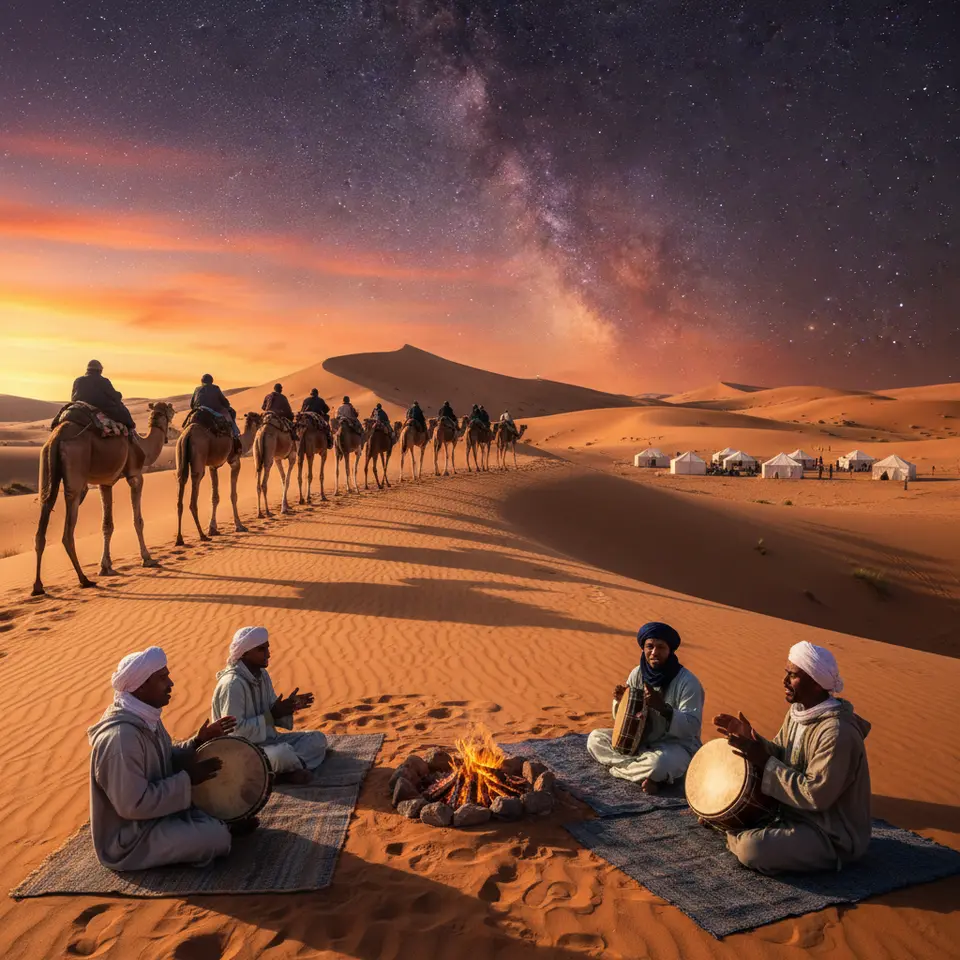
Mounting a camel caravan, you’ll traverse soft sand toward a remote desert camp. Guides lead the procession at a leisurely pace, allowing you to absorb desert silence. Pause atop a dune to witness a stunning sunset, with colors deepening from fiery orange to muted violet.
Desert Camp Comforts
Desert camps range from fully enclosed tents with mattresses and solar-heated showers to more minimalist bivouacs under open skies. Traditional Berber musicians will perform around a campfire, sharing rhythmic songs that echo through the dunes. Expect nightly temperatures to drop significantly, so bring a warm jacket and insulated sleeping bag.
- Stargazing: With minimal light pollution, the Milky Way appears in sharp relief.
- Sunrise Tours: Early morning climbs reward you with a palette of pinks and golds.
After returning from the desert, drive north toward Fez. Stop in Rissani for fresh dates and a lively market atmosphere. Sample msemen pancakes drizzled in honey before continuing through palm-lined oases. Keep an eye out for local cooperatives crafting saffron—the world’s most precious spice.
According to research at a major university travel lab, responsible desert tourism helps fund environmental conservation projects in fragile ecosystems. By choosing eco-conscious operators, you’ll support sustainable initiatives that preserve Saharan habitats.
Discovering Hidden Gems: Fez, Chefchaouen, and Beyond

Fez, often dubbed Morocco’s cultural capital, welcomes you with a maze of alleys in its ancient medina. Currently, more than 9,000 narrow lanes weave past centuries-old tanneries, artisan workshops, and historic madrasas. Visit the University of Al Quaraouiyine, recognized by UNESCO as the world’s oldest continuously operating university. You’ll be struck by the ornate gates of the Royal Palace and the scent of leather from the Chouara tannery.
Artisanal Encounters in Fez
- Pottery Workshops: Try your hand at shaping clay in nearby villages.
- Weaving Demonstrations: Observe intricate textile production on wooden looms.
Next, journey north toward the Rif Mountains and the famed Blue City of Chefchaouen. Layers of cobalt paint cover walls and staircases, creating a photographer’s dream. Sample fresh goat cheese at local farms, then sip mint tea in a rooftop café overlooking the Spanish Mosque at dusk.
Hiking Around Chefchaouen
Short hikes from town lead to panoramic viewpoints of the valley below. Signposted trails wind through olive groves, offering glimpses of local shepherds and their flocks. In this region, you’ll appreciate the stark contrast between mountain greenery and desert expanses encountered earlier in your itinerary.
Throughout these urban explorations, practice responsible tourism by supporting family-owned restaurants and cooperatives. A portion of proceeds often goes toward community development, ensuring that tourism benefits local residents.
Coastal Escape: From Rabat to Essaouira and Back
As your Morocco road trip nears its final days, follow the Atlantic coast back toward Marrakech. Stop in Rabat, Morocco’s capital, to admire the Hassan Tower and the fortified Kasbah of the Udayas overlooking the ocean. The city’s wide boulevards and manicured gardens offer a modern counterpoint to historic medinas.
Casablanca Highlights
Continue south to Casablanca, where the Hassan II Mosque stands partly over the sea, with its minaret piercing the sky. Guided tours provide insight into Moroccan craftsmanship, from carved stucco to inlaid marble. Afterward, stroll along the Corniche, sampling fresh seafood at beachside cafés.
Essaouira’s Maritime Charm
On the final leg, arrive in Essaouira, a UNESCO-listed port city known for its 18th-century ramparts and vibrant art scene. Windswept beaches attract kite surfers, while narrow lanes house galleries and artisan workshops creating thuya wood crafts and argan oil products.
- Live Music: Experience gnawa performances in local squares.
- Seafood Specialties: Try grilled sardines at an open-air stall.
Late afternoon, retrace the coastal highway back to Marrakech. As evening falls, treat yourself to a farewell feast in a traditional riad, reliving moments from dunes to mountain peaks. This segment offers a gentle transition from the road’s excitement to the comforts of city life.
Before departure, gather any last-minute souvenirs at the souks and reflect on the diversity experienced throughout your Morocco road trip. The blend of Atlas peaks, desert skies, and Atlantic breezes makes this route a compelling narrative of landscapes and cultures.
FAQs
1. What is included in a 10-day Morocco road trip?
A 10-day Morocco road trip typically includes Marrakech, High Atlas Mountains, Ait Benhaddou, Sahara Desert (Merzouga), Fez, Chefchaouen, and Atlantic coastal cities like Rabat, Casablanca, and Essaouira, covering culture, nature, and history.
2. Is it safe to drive in Morocco as a tourist?
Yes, Morocco is generally safe for tourists driving, especially on main highways. However, caution is needed in mountain and desert areas due to winding roads, livestock crossings, and changing weather conditions.
3. Do I need a 4×4 vehicle for this trip?
A 4×4 is highly recommended, especially for desert routes near Merzouga and some mountain passes in the High Atlas. It ensures better safety, comfort, and accessibility to remote destinations.
4. What is the best time for a Morocco road trip?
The best time is spring (March–May) and autumn (September–November). These seasons offer comfortable temperatures for driving, sightseeing, and desert camping without extreme heat or cold.
5. How much does a 10-day Morocco road trip cost?
Costs vary, but mid-range travelers can expect $900–$2,000 per person, including car rental, fuel, accommodations, food, and guided desert tours. Luxury options will significantly increase the budget.
6. Can I do this road trip without a guide?
Yes, it is possible to self-drive with GPS or offline maps. However, hiring local guides in cities like Fez and Marrakech enhances cultural understanding and helps navigate complex medinas.
7. What should I pack for the trip?
Pack layered clothing, comfortable shoes, sunscreen, sunglasses, a power bank, travel documents, and warm clothes for the desert nights. A basic first-aid kit and offline maps are also essential.
8. Are desert camps in Morocco comfortable?
Yes, desert camps range from basic traditional tents to luxury glamping setups with private bathrooms, beds, and dining facilities. Comfort level depends on your budget and chosen operator.
9. Do I need a visa for Morocco?
Many nationalities can enter Morocco visa-free for up to 90 days. However, entry rules vary, so always check updated requirements before traveling.
10. What makes this road trip special?
This journey combines mountains, desert, imperial cities, and coastal towns in one route, offering a unique mix of culture, adventure, cuisine, and landscapes within a single immersive experience.
Conclusion
Embarking on this 10-day Morocco road trip provides a rich tapestry of experiences, from the bustling medina of Marrakech to serene Saharan camps and the azure alleys of Chefchaouen. By weaving together cultural immersion, outdoor adventures, and coastal escapes, travelers gain insight into Morocco’s multifaceted identity in today’s travel landscape. Remember to respect local customs, choose sustainable options, and pace your journey to savor every moment. Pack your spirit of discovery, and set out on a road trip that will linger in your memories long after you return home.



Leave a Reply