

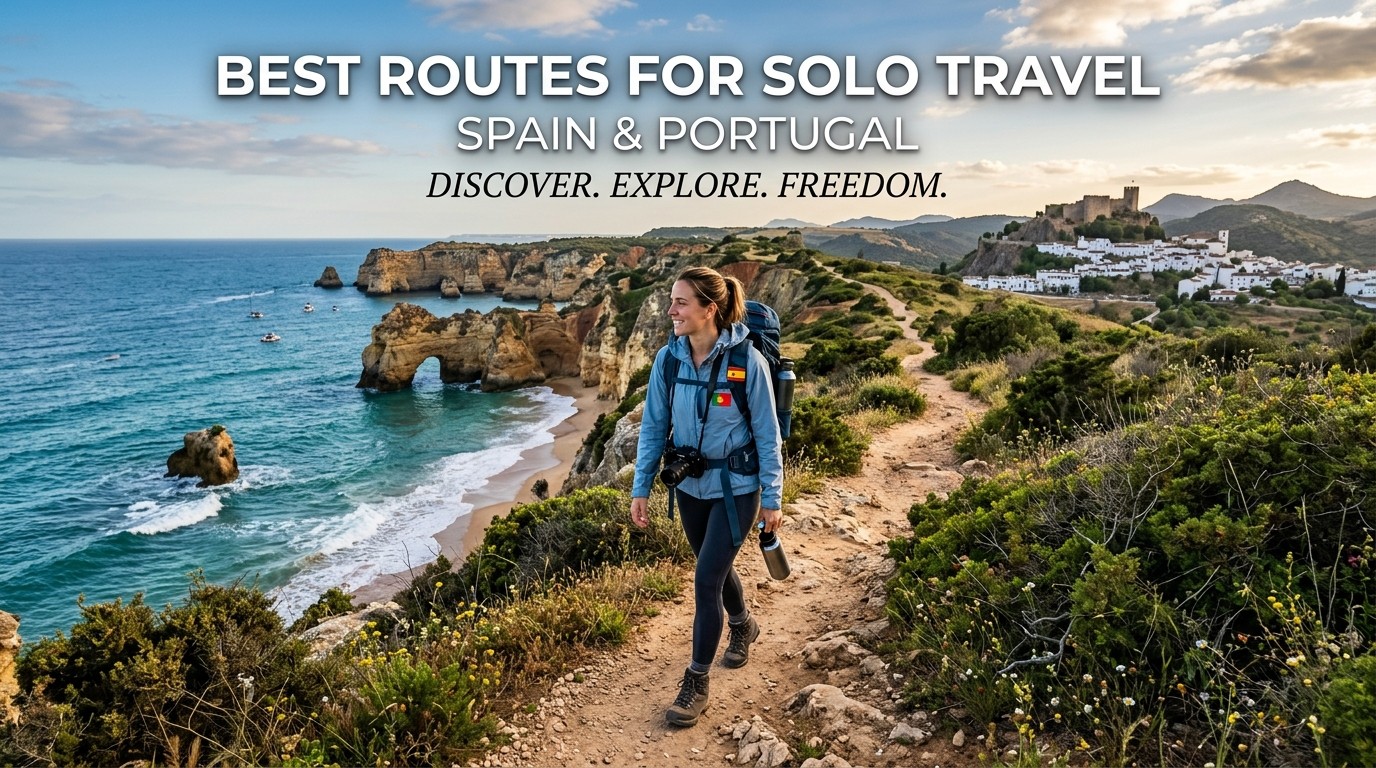
The smartest solo route is Barcelona, Madrid, Granada, Córdoba, Seville, then Lisbon, Sintra, and Porto, because it reduces backtracking and fits the strongest train-and-bus links across Iberia. This route also supports a calmer solo travel rhythm: big-city arrival, cultural middle, and an easy Portugal finish.
Planning the Best Route for Solo Travel Spain and Portugal is really about balancing safety, energy, transport, and the kind of memories you want to create alone. The best route is not the one that covers the most cities; it is the one that keeps movement smooth, avoids wasted transfers, and gives you enough time to actually enjoy each stop.
For a solo traveler, Spain and Portugal work especially well because they combine excellent rail corridors, strong walkability in major cities, and a natural westward finish into Portugal. A route that starts in Spain and ends in Portugal is usually easier psychologically, because the trip begins with familiar high-capacity hubs and ends with a slower, more reflective pace.
Route Summary
The Best Route for Solo Travel Spain and Portugal is Barcelona → Madrid → Granada → Córdoba → Seville → Lisbon → Sintra → Porto. That sequence makes sense because it follows a logical southbound flow in Spain before crossing into Portugal and finishing with two highly solo-friendly cities.
If you have 10 to 14 days, this route is the cleanest version. If you have more time, you can add Valencia, Málaga, or the Algarve without breaking the overall flow.
Why This Route Works
The Best Route for Solo Travel Spain and Portugal works because it reduces zigzagging and saves your mental energy for sightseeing instead of transit planning. Barcelona and Madrid are the easiest places to begin because they have strong international connections, plenty of accommodation choices, and transport systems that feel manageable for a first-time solo trip.
From Madrid, moving into Andalucía creates a natural cultural arc: Granada, Córdoba, and Seville are close enough to cluster, but each one feels distinct enough to justify its own stop. Then Portugal becomes the quieter second half, with Lisbon as a base for day trips and Porto as a satisfying final destination.
Recommended Itinerary
Here is the most balanced version of the Best Route for Solo Travel Spain and Portugal for a 12 to 14-day trip.
This structure gives you enough depth to enjoy each stop without rushing, while still keeping the trip efficient. It is especially useful for solo travelers who want a clear plan but do not want every day to feel overbooked.
Spain First
The Best Route for Solo Travel Spain and Portugal usually starts in Spain because Spain has the strongest long-distance rail structure for city hopping. Barcelona to Madrid is one of the easiest big jumps to make, and Madrid then works as a central connector toward southern Spain.
Barcelona is a smart opening city because it gives you an easy landing experience: sea air, well-marked neighborhoods, and lots of places where solo diners and solo walkers do not stand out. Madrid then gives you a more urban, classic capital experience, which helps you transition into the slower rhythm of Andalucía.
Andalucía Flow
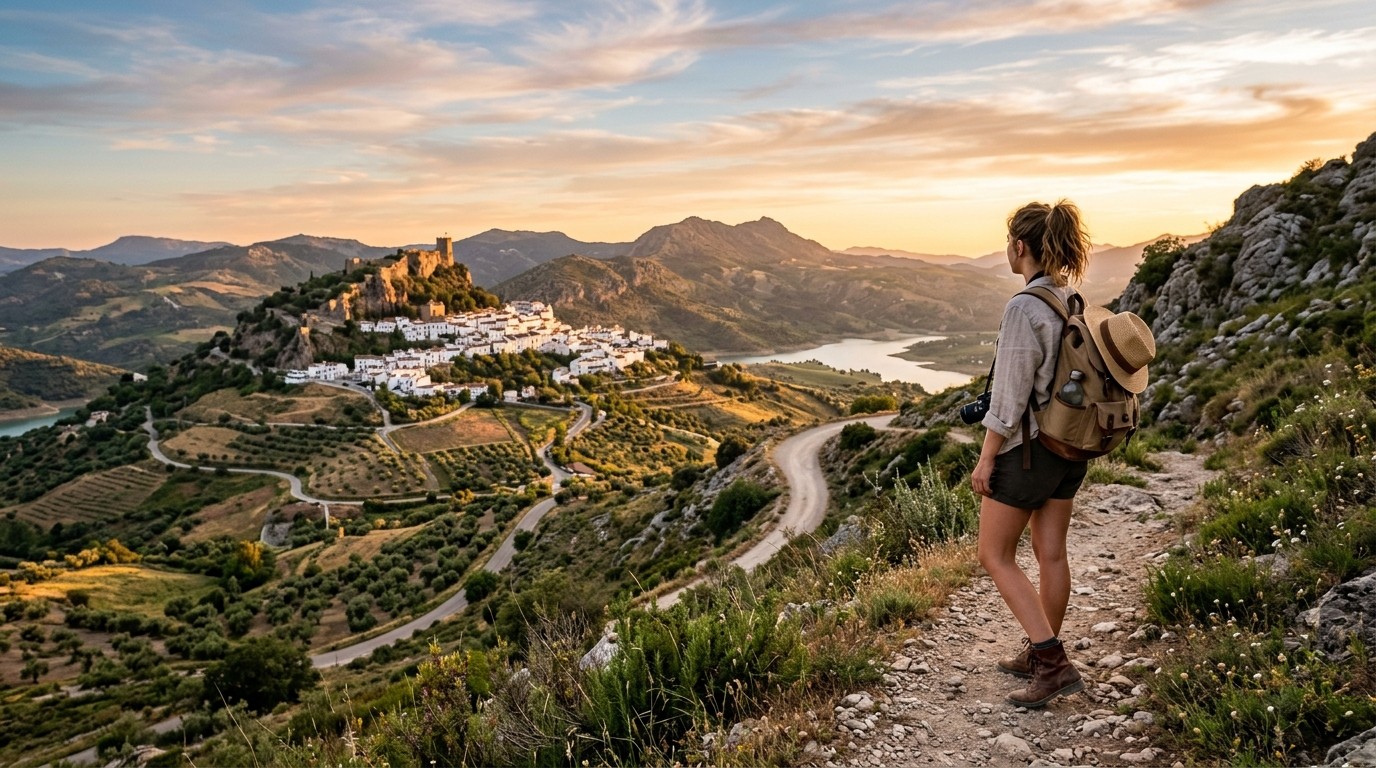
The Best Route for Solo Travel Spain and Portugal becomes especially rewarding once you reach Granada, Córdoba, and Seville. These cities are close enough to connect smoothly, but each one offers a different emotional pace, which matters a lot on a solo trip.
Granada is best for one or two nights if your main goal is the Alhambra and atmospheric evenings. Córdoba works well as a shorter stop because it is compact and easy to explore on foot, while Seville deserves more time because it combines major sights with a strong social atmosphere that can feel welcoming to solo travelers.
Portugal Finish
The Best Route for Solo Travel Spain and Portugal is strongest when Portugal comes last, because Lisbon and Porto feel like a relaxing final chapter rather than a transit-heavy middle section. Lisbon is an ideal base because you can explore on foot, use trams and short rides, and take easy day trips to Sintra or Cascais.
Porto is a memorable final stop because it is compact, scenic, and easy to enjoy without needing an aggressive schedule. Ending in Porto also gives your trip a more reflective finish, which is often better for solo travelers than ending in a huge, chaotic arrival city.
Best Transport Mix
For the Best Route for Solo Travel Spain and Portugal, the transport strategy should be train first, bus second, and flight only when you need to save a major amount of time. Spain’s high-speed rail works very well between Barcelona, Madrid, Córdoba, and Seville.
For the Portugal side, Lisbon and Porto are well connected by rail, and Lisbon also works well as a base for Sintra. The only part that usually needs extra planning is the Spain-Portugal border crossing in the south, where Faro-to-Seville is typically handled by bus rather than train.
When to Fly
A flight can make sense if you are short on time or if flight pricing beats the cost of a long overland transfer. Still, the Best Route for Solo Travel Spain and Portugal usually feels better when you keep flights to the beginning or end of the trip rather than in the middle.
That is because flights interrupt the flow of a solo journey more than trains do. Trains keep the trip feeling grounded, which helps with confidence, pacing, and energy management.
Best Route Logic
The best route for solo travel across Spain and Portugal is not simply about connecting famous cities; it is about building a travel pattern that feels calm, logical, and emotionally easy to follow. For a solo traveler, that matters more than people usually realize, because every extra transfer, unnecessary detour, or confusing arrival creates mental fatigue that steals energy from the trip itself. A route that moves from Barcelona to Madrid, then into southern Spain, and finally into Portugal gives you a strong sense of direction and momentum. That sense of momentum is important because solo travel can sometimes feel unstructured, especially when you are making every decision on your own.
This route also works because Spain and Portugal have different travel rhythms. Spain’s larger cities and high-speed rail network make the first half of the journey efficient and active, while Portugal’s more compact cities make the second half feel softer and more reflective. That contrast is useful for solo travel psychology. You begin in a place with strong infrastructure and high confidence-building energy, then gradually move toward a calmer environment where you can slow down and enjoy the trip at a deeper level. In practice, that means less exhaustion and more meaningful exploration. The route is not just efficient; it is emotionally intelligent.
City-by-City Flow
The city sequence matters because each stop should feel like a natural transition rather than a random collection of destinations. Barcelona is an excellent entry point because it gives you a vibrant introduction without overwhelming you too quickly. It is large, but it is also tourist-friendly, which makes it easier to settle in as a first-time solo traveler. After that, Madrid offers a more classic capital experience and works well as the bridge into the rest of the route. Once you leave Madrid, the trip begins to narrow into more atmospheric, history-rich destinations that feel easier to absorb one by one.
Granada, Córdoba, and Seville form the core of the southern Spain section. Granada gives depth and beauty, Córdoba gives compact charm, and Seville gives warmth, energy, and a strong social atmosphere. This is an ideal sequence because it gradually shifts the trip from fast-paced urban movement into slower, more immersive cultural travel. After Seville, crossing into Lisbon feels like a reset. Lisbon introduces a new national rhythm without making the journey feel abrupt. Sintra works best as a day trip because it breaks up the pace without requiring an overnight stay. Porto then serves as a strong closing chapter, giving you a scenic and memorable finish that does not feel rushed.
Solo Travel Experience
Solo travelers often choose routes based on convenience, but the emotional experience matters just as much. The best route for Spain and Portugal should make you feel independent without making you feel isolated. That is why the suggested sequence is so effective. The cities are lively enough that you can blend in easily, but not so chaotic that the trip becomes stressful. You get the freedom to make spontaneous choices, while still following a framework that keeps the journey grounded.
Another important part of the solo experience is the daily rhythm. In Barcelona or Madrid, you might spend the morning sightseeing, the afternoon resting or working through your plans, and the evening taking a long walk or having dinner alone. In Seville or Lisbon, the experience becomes more atmospheric and slower, which gives you time to reflect. Solo travel often becomes more enjoyable when the trip naturally alternates between stimulation and rest. That balance is one of the strongest reasons this route works so well. It avoids burnout, encourages confidence, and lets you enjoy your own company without pressure.
Transport Comfort
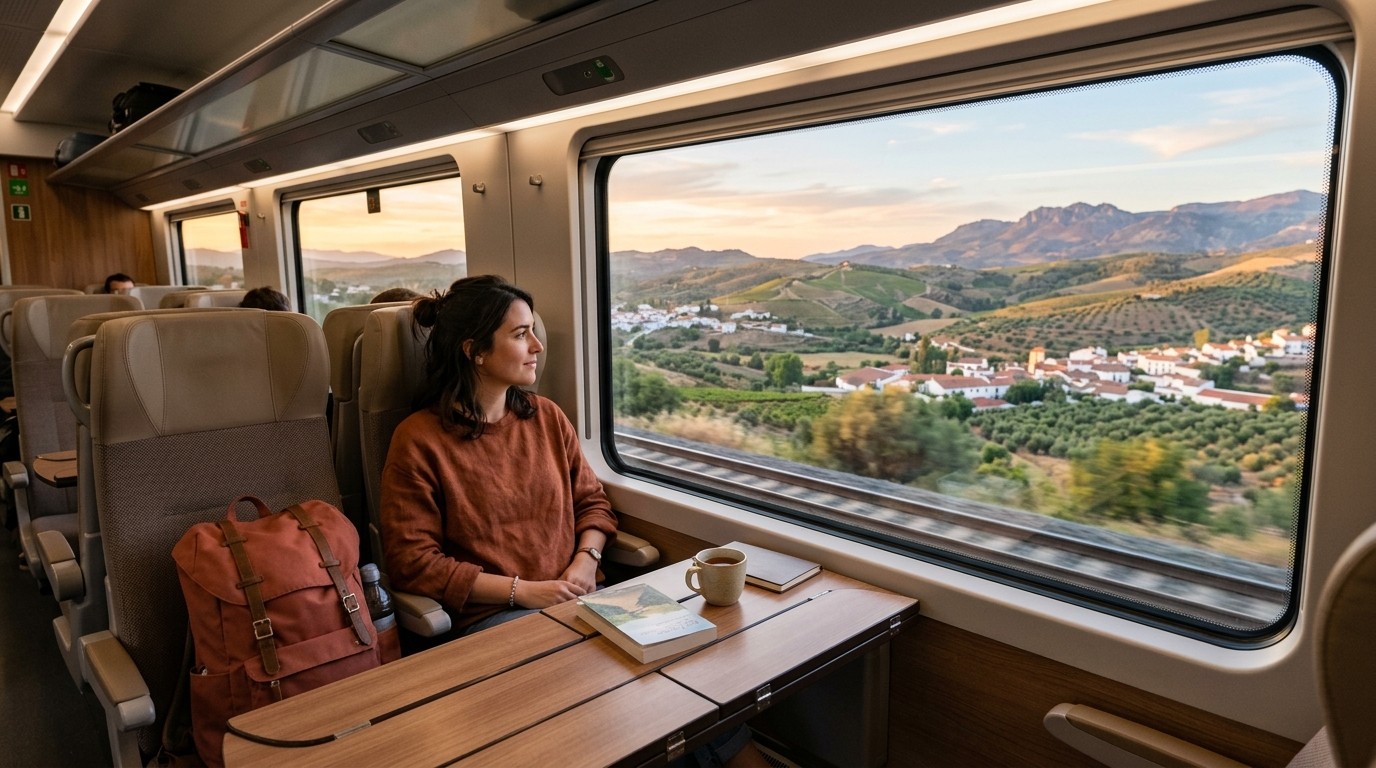
Transport comfort is one of the biggest hidden factors in solo trip success. The more comfortable your transfers are, the more energy you have for the destinations themselves. High-speed trains in Spain reduce the friction of movement, especially on the Barcelona to Madrid and Madrid to southern Spain segments. Trains let you move without the stress of airports, luggage restrictions, or long security lines. For a solo traveler, that means fewer moving parts and less chance of feeling overwhelmed. Even when you are traveling alone, the journey should feel manageable, not demanding.
In Portugal, the most comfortable approach is to use train travel where it fits and buses only when needed for specific cross-border or non-direct routes. Lisbon and Porto are both easy to handle once you arrive, because their city centers are compact and welcoming. That matters after several days of movement, when your body and mind may be tired from switching hotels. Comfort is not a luxury in solo travel; it is part of the strategy. The smoother your transportation, the more time you gain for actual experiences, and the better the whole itinerary feels.
Planning Tips
A successful solo trip depends on simple planning habits that protect your time and attention. First, avoid overpacking the itinerary. It is tempting to add more cities because Spain and Portugal both have many appealing stops, but too many destinations can turn a beautiful route into a tiring checklist. Second, book major transport in advance so you are not making stressful decisions during the trip. Third, choose accommodations near central areas or main transit lines, because that reduces the friction of arriving in a new city alone.
It also helps to build in one lighter day after every major transfer. This gives you room to recover, adapt to the new city, and avoid the pressure of “doing everything” on arrival day. Solo travel works best when you give yourself permission to travel at a human pace. You do not need to maximize every hour. In fact, the strongest route is the one that leaves a little space. That space allows for unexpected meals, quiet viewpoints, long walks, or simply a slow morning with coffee before you start exploring. Those moments often become the most memorable parts of the trip.
Final Travel Mindset
The best route for solo travel in Spain and Portugal is not only about geography; it is also about mindset. When you travel alone, the route should support confidence, curiosity, and emotional comfort. A well-designed route helps you feel capable, because you know what comes next and you are not constantly improvising under pressure. That sense of clarity can transform the whole journey. Instead of worrying about logistics, you can focus on the feeling of being present in each place.
This is why the Spain-and-Portugal route is such a strong choice for solo travel. It gives you a beginning that feels exciting, a middle that feels rich and rewarding, and an ending that feels calm and complete. By following a logical route, you reduce stress and increase enjoyment. You also create a journey that feels coherent, which is important when you are traveling on your own. The trip becomes more than a list of cities. It becomes a personal experience with structure, flow, and meaning.
Safety And Confidence
Solo travel is not just about where to go; it is also about how safe and calm you feel moving between places. The Best Route for Solo Travel Spain and Portugal is especially good for that because the route stays inside popular travel corridors where signage, accommodations, and public transport are relatively easy to use.
For a stronger sense of control, book your intercity legs early, arrive in daylight when possible, and stay close to major transport links or central districts. Those habits reduce stress during arrivals and make it easier to settle into each city quickly.
Packing And Planning
A smart packing strategy supports the Best Route for Solo Travel Spain and Portugal because you will be moving often but not constantly. A carry-on-friendly setup works best if you are switching trains and checking in and out of hotels several times.
Keep one outfit accessible for arrival day, one lightweight layer for evening walks, and a secure crossbody bag for transit days. If your trip includes outdoor add-ons or weather-sensitive side trips, Adventure Travel Insurance becomes especially relevant because it helps cover unexpected disruptions and gives extra peace of mind.
Related Travel Angles
If you write this article for SEO, you can naturally place Solo Travel Ireland in a paragraph about how solo travelers compare different European routes before choosing Iberia. That makes the keyword feel contextual rather than forced.
Iceland Solo Travel can fit in a section about colder-season alternatives, especially if you are explaining why Spain and Portugal are better for a warmer, lower-friction solo experience.
Flight Safety and Travel Risk Management works well in a paragraph about choosing flights wisely, tracking layovers, and reducing airport stress on the first and last day of the trip.
Content Structure You Can Publish
The Best Route for Solo Travel Spain and Portugal works best in a blog format that starts with a short summary, then expands into route logic, transport guidance, and city-by-city planning. You should keep the opening practical and emotionally reassuring, because readers searching this topic usually want confidence as much as information.
A strong structure is:
- Summary.
- Why this route works.
- Day-by-day itinerary.
- Transport guidance.
- Safety and planning tips.
- Solo travel mindset.
- Conclusion.
- FAQ.
That structure matches informational intent and keeps readers moving through the article without feeling overwhelmed.
Conclusion
The best solo route through Spain and Portugal is the one that feels smooth, safe, and rewarding from start to finish. Barcelona, Madrid, Granada, Córdoba, Seville, Lisbon, Sintra, and Porto form the strongest sequence because they combine rail efficiency, walkability, and a natural east-to-west flow.
For most solo travelers, this route gives the best balance of culture, comfort, and confidence. It starts with big-city energy, moves through Spain’s most atmospheric southern cities, and ends in Portugal with a slower pace that feels ideal for reflection and final memories.
Frequently Asked Questions (FAQ)
1. What is the best route for solo travel Spain and Portugal?
The best route is Barcelona → Madrid → Granada → Córdoba → Seville → Lisbon → Sintra → Porto because it minimizes backtracking and fits the strongest transport connections.
2. How many days do I need?
A good trip is 10 to 14 days, while 14 to 18 days gives you more breathing room for day trips and slower exploration.
3. Should I start in Spain or Portugal?
Starting in Spain is usually easier because the rail network is stronger for long overland movement, and Portugal works well as the calmer final chapter.
4. Is Seville worth staying longer in?
Yes. Seville is one of the best cities for solo travelers because it is walkable, social, and rich in evening atmosphere.
5. Can I do this route without flying?
Yes, but you may need to use a bus for the southern Spain-to-Portugal crossing, especially between Faro and Seville.
6. Is Lisbon good for solo travelers?
Yes. Lisbon is easy to navigate, has good day-trip options, and works well as a base for a solo traveler.
7. Is Porto a good final stop?
Yes. Porto is compact, scenic, and low-stress, which makes it a strong ending city for a solo itinerary.
8. What is the best time of year to go?
The most comfortable times are usually spring and early autumn, when temperatures are milder and walking cities feels easier.
9. Do I need travel insurance?
Yes, especially if your trip includes flights, multiple transfers, or outdoor side trips, because Adventure Travel Insurance adds a useful safety net.
10. How do I keep the trip stress-free?
Book the main transport legs early, keep your itinerary realistic, and avoid packing too many cities into too few days.


Leave a Reply