

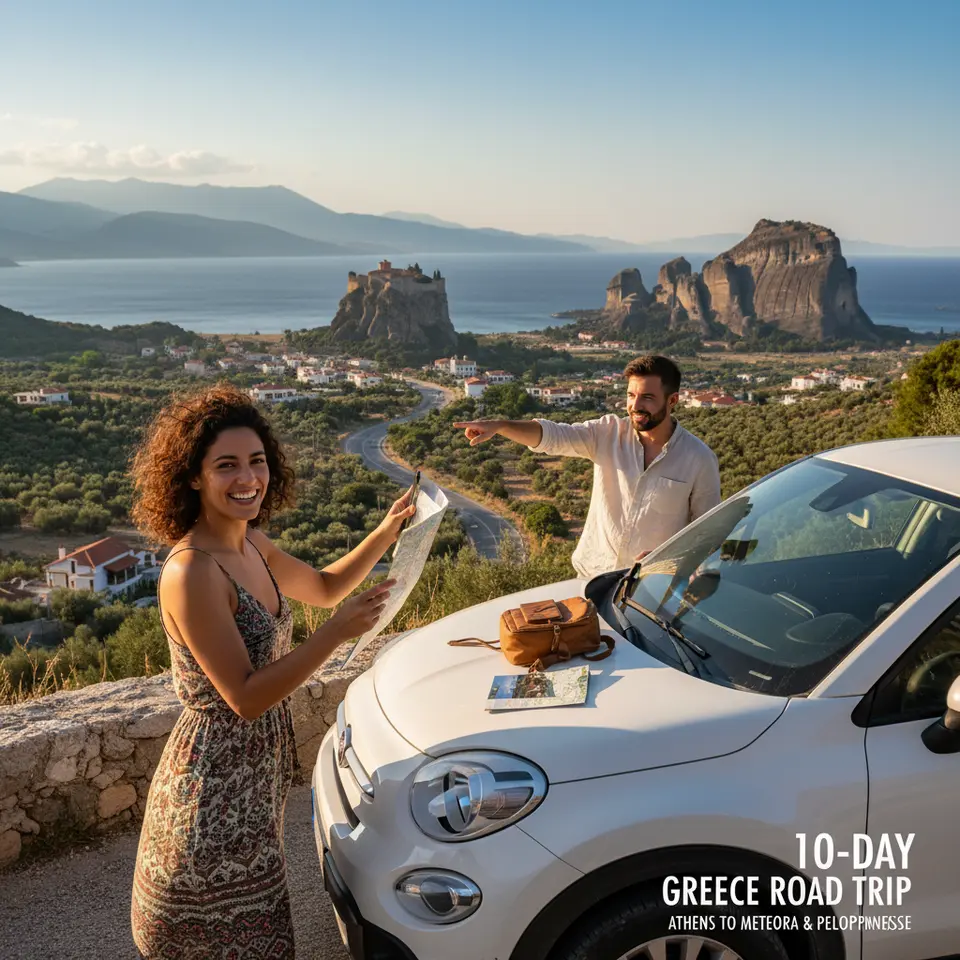
In today’s digital landscape, crafting an unforgettable Greece road trip requires thoughtful planning and a spirit of adventure. This year , travelers are drawn to the Hellenic world by its combination of ancient landmarks, towering mountains, and idyllic seaside villages. Over ten days, you’ll drive from Athens’ bustling streets to Meteora’s cliff-top monasteries, then circle through the diverse landscapes of the Peloponnese. Along the way, you’ll mix cultural deep dives with leisurely beach stops, savor local cuisine in family-run tavernas, and uncover hidden gems far from the tourist trail. We’ve compiled insights from sources such as UNESCO and the official Visit Greece portal to ensure your journey aligns with current conservation guidelines and seasonal events. By following this structured yet flexible itinerary, you’ll gain practical tips on car rental, road conditions, accommodations, and must-try dishes. Whether you’re timing your drive to coincide with traditional festivals or chasing golden hour views from ancient fortresses, this guide will orient you for success. Prepare for a seamless blend of history, scenery, and warm Mediterranean hospitality as you embark on a Greece road trip that promises lifelong memories.
Getting Started in Athens and Itinerary Essentials
Starting your Greece road trip in Athens means immersing yourself in the cradle of Western civilization before heading into the open countryside. Upon landing at Athens International Airport, collect your rental car—opt for a compact model to handle narrow city lanes while still offering trunk space for luggage. Today’s major car hire firms provide GPS-enabled vehicles, but bringing a portable charger and downloading offline maps ensures smooth navigation when cell service dips. Be aware that traffic in central Athens can be dense at peak hours; plan to pick up your car outside rush periods and park at a secure lot near your downtown hotel.
Planning Your Route and Accommodations
Before leaving the capital, outline your daily mileage, average drive times, and alternate routes in case of roadworks. Greece’s highways are well-maintained, but in mountainous regions, watch for hairpin turns and occasional livestock crossings. Prebook lodgings in key hubs—Athens, Kalambaka (for Meteora), Nafplio, and coastal villages—to guarantee availability. Use a mix of boutique guesthouses, farm stays, and seaside inns to experience authentic hospitality. This year , many properties still offer flexible cancellation policies, so you can adjust dates without penalty if weather or flight schedules shift.
Essential Packing and Local Customs
Packing for a multi-day drive across diverse terrain means layering your wardrobe and including sturdy walking shoes. Sunscreen, a reusable water bottle, and a basic first-aid kit are indispensable. Cash is preferred for toll booths, village shops, and small tavernas, so withdraw euros before leaving major towns. Respect local customs: cover shoulders and knees when visiting religious sites, and learn a few Greek phrases—locals appreciate even a “kalimera” (good morning) or “efcharistó” (thank you). By laying these foundations in Athens, you’ll set the stage for a well-organized, enjoyable Greece road trip that balances spontaneous exploration with reliable planning.
Exploring Delphi and the Mountain Villages
On day two, depart Athens early for the 180-kilometer drive to Delphi, a site once deemed the navel of the ancient world. This stretch winds through olive groves and pine-covered foothills, offering glimpses of rural life. Arrive mid-morning to stroll the stone-paved Sacred Way leading to the Temple of Apollo. Archaeological excavations here date back to the 8th century BCE, and the Delphi Archaeological Museum houses exquisite bronzes and votive offerings. Take time to stand inside the ancient theatre, where you’ll enjoy commanding views of the valley below.
Sample Local Flavors
After exploring the temple complex, walk to the nearby village square to savor regional specialties. Sample textiles from the nearby University of Athens ethnographic research, which highlight how Arachova’s cheeses and honey have supported local economies for centuries. Pair a slice of goat cheese pie with a cup of Greek coffee while overlooking terraced vineyards. Read for more details : Morocco Road Trip
Venturing to Arachova and Galaxidi
Continue through the foothills of Mount Parnassus to the pastel-clad village of Arachova, known for its weaver ateliers and winter sports culture. In today’s relaxed pace, you might browse artisanal wool garments or join villagers for a meze platter in a stone-walled taverna. By afternoon, descend toward the Gulf of Corinth and stop in Galaxidi, an 18th-century seafaring town once famed for its merchant fleet. Stroll along the harbor to admire neoclassical mansions and sample freshly caught fish. As sunset approaches, return to an overnight stay in Arachova or drive back to Athens, ready for tomorrow’s journey to Meteora.
Discovering Meteora’s Monasteries
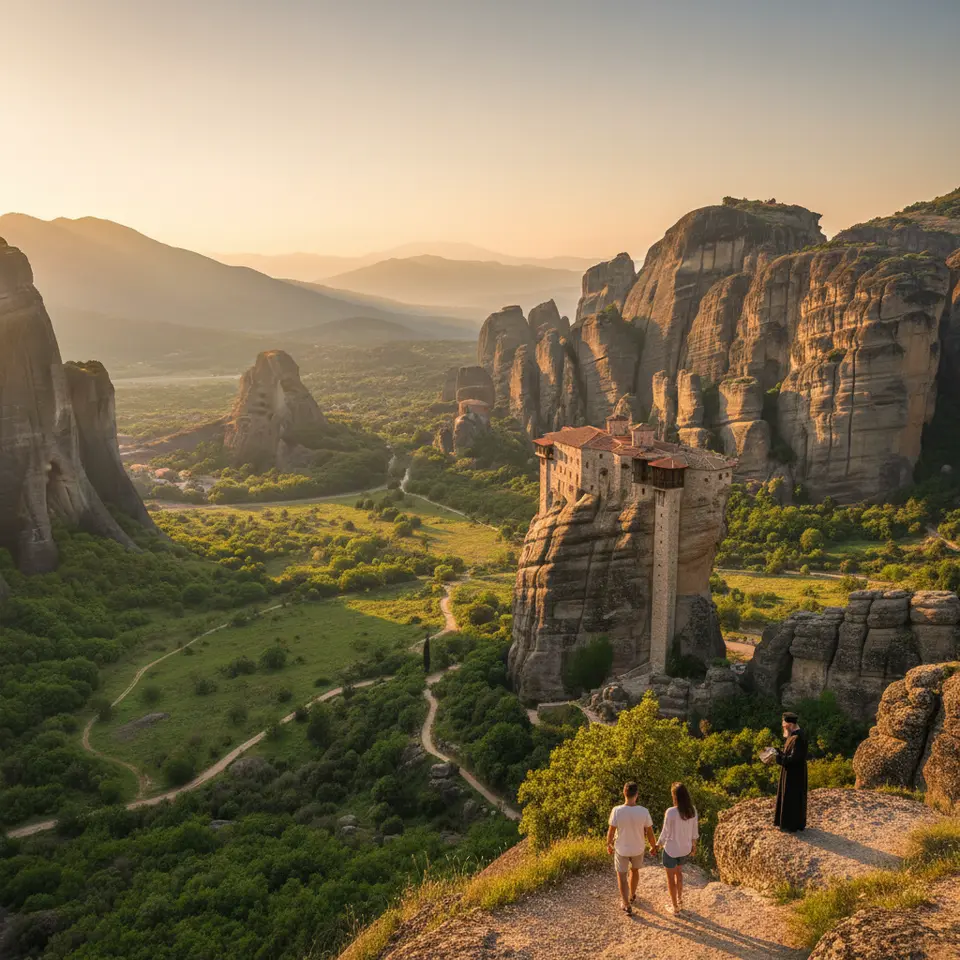
Day three brings you northwest across national roads to Meteora, a UNESCO World Heritage site celebrated for its gravity-defying monasteries perched atop sandstone pillars. Early arrival ensures parking options near Kastraki or Kalambaka and cooler temperatures during uphill hikes. Follow marked trails that lead to viewpoints capturing the afternoon light dancing on rock faces and valley meadows.
Sunset Photography and Local Cuisine
Position yourself at one of the designated overlooks around Great Meteoron Monastery as sunlight gilds the façade in hues of gold and amber. Photographers and historians alike will appreciate the blend of Eastern Orthodox architecture and Byzantine frescoes. Afterward, descend to a family-run taverna where you can taste regional specialties: mushroom pie infused with local herbs, walnut spoon sweet served in small glasses, and warmed honey-drizzled yogurt. Pair these with a glass of retsina or a chilled draft beer to unwind beneath a star-spangled sky.
Full-Day Monastery Exploration
The following day, dedicate your time to visiting the six active monasteries: Holy Trinity, Roussanou, Varlaam, Great Meteoron, St. Stephen, and St. Nicholas Anapausas. Start at first light to avoid crowds, paying attention to dress code requirements of covered shoulders and knees. Each site reveals unique fresco cycles and centuries-old manuscripts. Between visits, stop at scenic pullouts to trace the layers of rock shaped by millennia of erosion. For a change of pace, rent a mountain bike or ATV and head along lesser-known paths that lead to abandoned hermitages and panoramic ridges.
Journey Through the Peloponnese: Nafplio to Monemvasia
Leaving Meteora, head south through the Spine of Greece toward the Peloponnese peninsula. An optional detour follows back through olive groves near Delphi, where UNESCO-protected olive cultivars have thrived for thousands of years. Cross the historic Corinth Canal via bridge before reaching Nafplio, a city steeped in Venetian and Ottoman heritage. Check into a guesthouse near Syntagma Square, then climb the steep ramparts of the Palamidi Fortress to capture sunset views over the Argolic Gulf.
Archaeological Wonders: Epidaurus and Mycenae
On day six, drive east to the sanctuary of Asklepios at Epidaurus. The ancient theatre here remains renowned for its remarkable acoustics—observe how a whisper at stage center carries to the farthest rows. Afterward, continue to Mycenae to walk beneath the Lion Gate and explore the subterranean tombs attributed to Agamemnon. Return to Nafplio for fresh-caught octopus grilled on an open flame, or kayak along the coastline to Karathona Beach before relaxing with a wine tasting at a nearby vintner.
Medieval Charms of Monemvasia
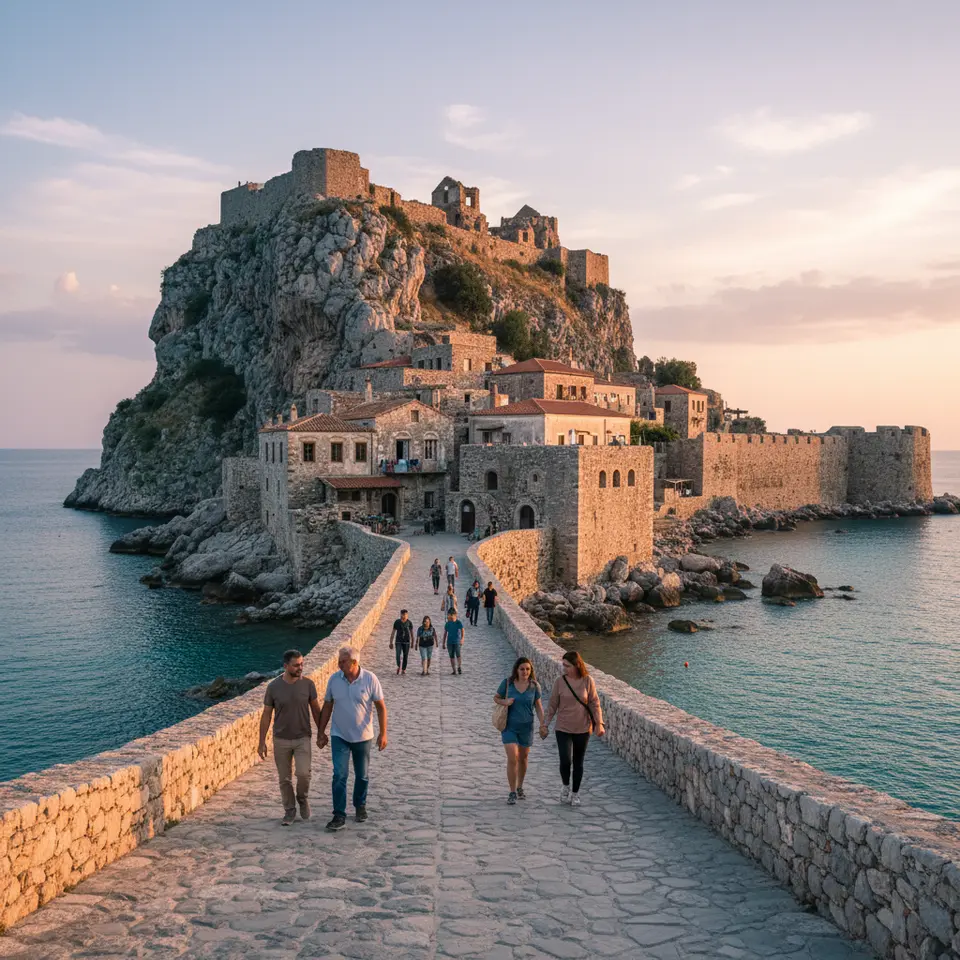
Proceed down the eastern coastline to Monemvasia, nicknamed the “Gibraltar of the East.” Park at the causeway entrance and meander through the Lower Town’s cobblestone lanes. Ascend to the Upper Town ruins to survey the fortress walls and sea horizon. As evening approaches, dine on dakos—a Cretan barley rusk salad topped with tomato, feta, and oregano—while watching fishing boats drift home. Overnight in a renovated stone house built into the fortress walls.
Southern Coastline and Return to Athens
For the final stretch, cross to Elafonisos Island by ferry to swim at Simos Beach, celebrated for its turquoise waters and sand dunes. Snorkel among seagrass beds or rent a kayak to explore hidden coves. Later, return to the Peloponnese mainland at Gytheio and sample the local fish soup, kakavia, at a waterfront café.
Mani Peninsula Exploration
Drive along the rugged and scenic Mani Peninsula, one of the most authentic highlights of your Greece road trip, where dramatic landscapes, stone villages, and coastal beauty come together in a truly unique experience. The winding roads take you through rocky hills, olive groves, and endless sea views, offering plenty of moments to stop and admire the untouched natural surroundings.
Begin with visits to the striking tower villages of Vathia and Limeni. Vathia is known for its haunting cluster of traditional stone towers rising from the hillside, reflecting the region’s historic defensive architecture and giving a glimpse into Mani’s ancient past. In contrast, Limeni offers a peaceful seaside atmosphere with crystal-clear waters, stone houses, and waterfront tavernas where you can enjoy fresh seafood while overlooking the calm bay during your Greece trip.
Continue onward to the impressive Diros Caves, a natural wonder where you glide by small boat through underground waterways surrounded by spectacular stalactite and stalagmite formations. The cool air, echoing chambers, and shimmering reflections create a magical underground world that feels completely different from the sunny landscapes above, making it a must-see stop on any Greece road trip.
Afterward, visit a traditional family-run olive mill, where you can learn about ancient olive oil production methods still used today. Here, you’ll taste freshly pressed, single-estate olive oil with rich, earthy flavors that represent the essence of the Mani region and its long agricultural heritage.
End your day in the charming coastal village of Kardamyli, set between the deep blue sea and the towering Taygetos Mountains. This peaceful destination is perfect for relaxation, with its stone-built houses, artistic vibe, and breathtaking views. Enjoy a memorable dinner at a cliffside taverna, where slow-cooked lamb, local wines, and warm hospitality create the perfect evening atmosphere—bringing a beautiful close to your Greece trip day in Mani.
Final Day Through Sparta and Lake Stymphalia
On day ten, journey north through the historic plains of Sparta. Visit the local archaeological museum and wander among remnants of the ancient acropolis. Continue to Lake Stymphalia, a protected wetland lauded by conservationists for its birdlife. Enjoy a gentle hike along the shoreline before returning to Athens in the late afternoon. Drop off your rental car and celebrate your Greece trip with a farewell dinner in Monastiraki, reflecting on ten days of cultural immersion, scenic drives, and timeless memories.



Leave a Reply