

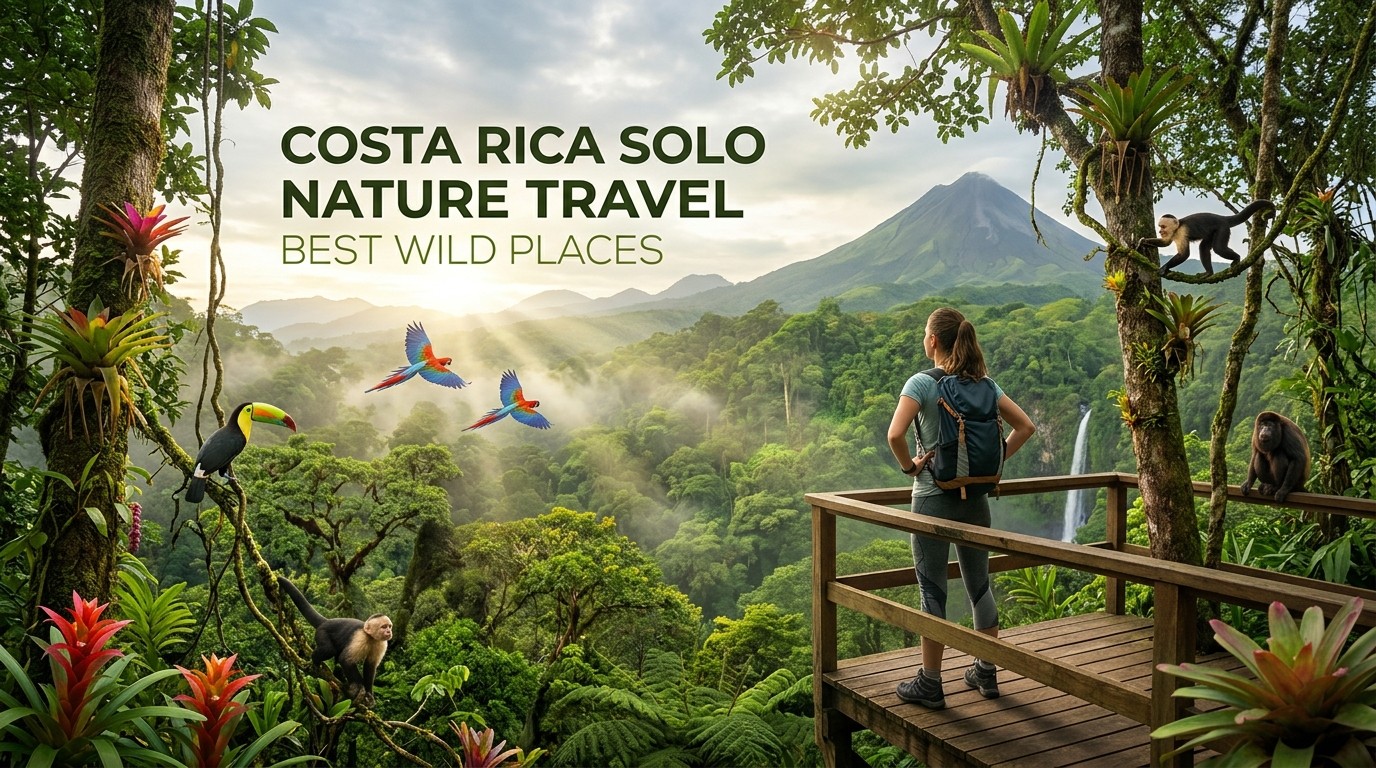
Costa Rica Solo Nature Travel rewards patience, curiosity, and smart planning with jungle sounds, volcanic views, ocean breezes, and enough structure to feel safe without losing freedom.
Costa Rica Solo Nature Travel stands out because the country makes it easy to move between biodiverse parks, beach towns, cloud forests, and local communities without needing a complicated itinerary. For solo travelers, that balance matters. You can join a guided hike in the morning, spend the afternoon in a quiet café, and end the day watching monkeys move through the trees. The country’s tourism ecosystem is built around nature, so many lodges, shuttle services, and tour operators understand the needs of independent visitors. Costa Rica Solo Nature Travel can feel welcoming from the start because basic logistics are easier to manage than in many other wilderness destinations.
Another reason Costa Rica Solo Nature Travel is so appealing is the variety. You can choose a volcano base, a rainforest corridor, a surf town, or a remote peninsula depending on your mood. Some solo travelers want social energy and easy access to tours; others want deep quiet and long walks. Costa Rica supports both. Costa Rica Solo Nature Travel is also shaped by the country’s conservation culture, so a lot of the best experiences are centered on protected landscapes rather than overbuilt attractions.
The best mindset before you go
Costa Rica Solo Nature Travel works best when you travel with a flexible plan rather than a rigid checklist. The weather can shift fast, road conditions can change, and animals do not keep schedules. If you accept that rhythm, the trip becomes richer. You stop chasing every landmark and start noticing small things: the first call of a howler monkey, the smell of wet earth after rain, or the way a trail opens suddenly to a volcano view.
Best Wild Places for Solo Travelers
| Place | Best for | Solo travel feel | Main wildlife | Access level |
|---|---|---|---|---|
| Monteverde Cloud Forest | Misty forest walks | Social but peaceful | Quetzals, hummingbirds, monkeys | Moderate |
| Corcovado National Park | Deep wilderness | Remote and intense | Tapirs, scarlet macaws, coatis | Challenging |
| Tortuguero | River and turtle watching | Calm and immersive | Turtles, caimans, toucans | Moderate |
| Arenal and La Fortuna | Volcano, hot springs, hikes | Easy and organized | Birds, frogs, sloths | Easy |
| Cahuita and Puerto Viejo | Caribbean coast nature | Relaxed and mixed | Sloths, monkeys, reef life | Easy |
| Rincon de la Vieja | Volcanic trails | Rugged and active | Birds, reptiles, forest mammals | Moderate |
Costa Rica Solo Nature Travel gives you more than one way to experience the country. The strongest part of Costa Rica Solo Nature Travel is that you can combine accessible comfort with real adventure. A first-time solo visitor might use Arenal as a soft landing, then move toward Monteverde for cloud forest trails, and finally finish on the Osa Peninsula for a deeper wild experience.
How to Choose Your Wild Base
Costa Rica Solo Nature Travel becomes much easier when you choose a base that matches your personality. If you like convenience, pick La Fortuna near Arenal because it has steady transport, many tours, and a good mix of relaxation and outdoor activity. If you prefer cooler air and misty scenery, Monteverde is ideal for slow mornings and forest walks. If you want remoteness and serious wildlife, the Osa Peninsula offers one of the most rewarding wilderness settings in Central America. If you are drawn to water, Tortuguero gives you a boat-centered experience where canals matter more than roads.
A simple decision rule
Ask yourself three questions. Do I want easy logistics or deeper isolation? Do I want social energy or quiet? Do I want mountains, forest, beach, or a mix? Your answers will quickly narrow the best base. For Costa Rica Solo Nature Travel, the right base is not the most famous place; it is the place that matches your comfort level and pace.
Places to prioritize
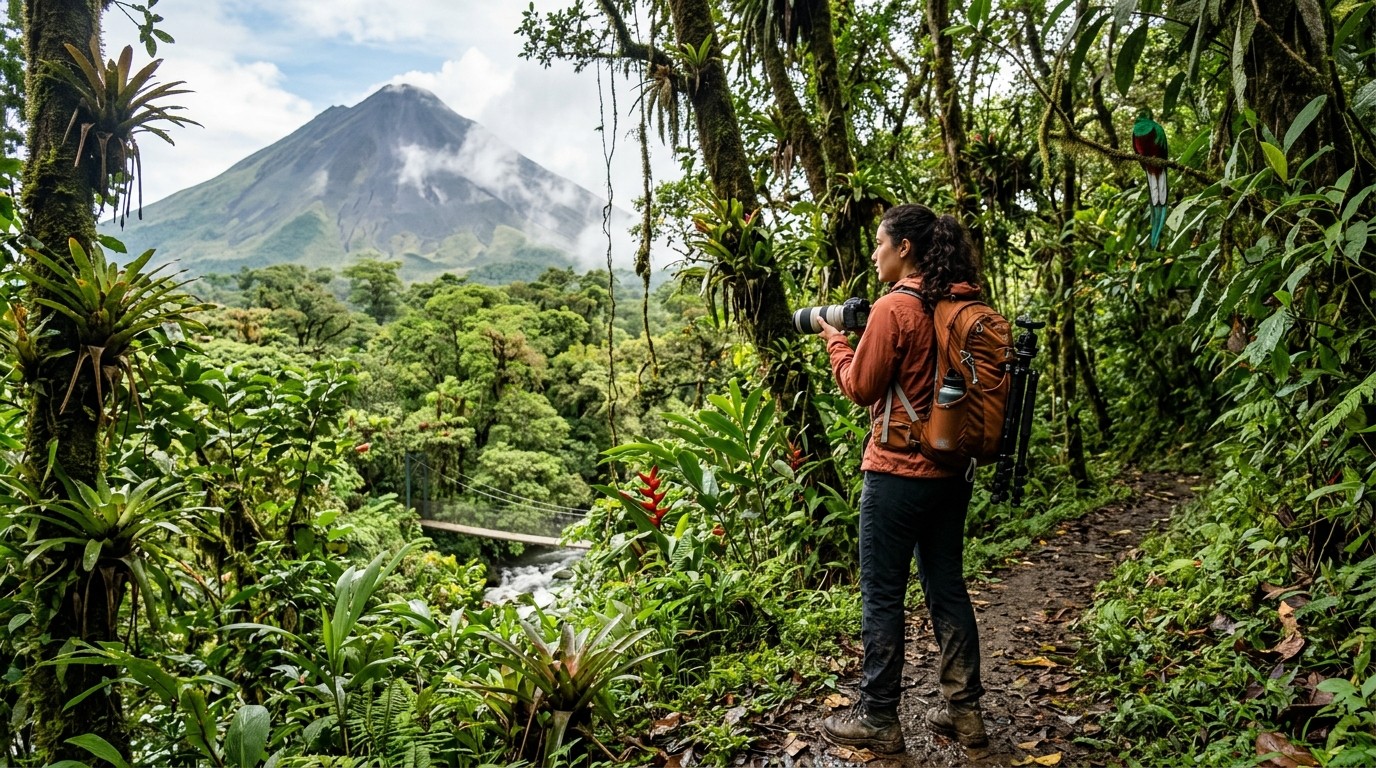
Monteverde Cloud Forest Reserve
Monteverde is one of the most atmospheric choices for Costa Rica Solo Nature Travel. The forest feels suspended between worlds, with fog drifting through giant trees and birds flashing through the canopy. Solo travelers often appreciate the structured trail systems, the abundance of guided options, and the chance to learn from local naturalists. The reserve is especially good for birdwatching, and even if you are not an expert, you will likely remember the soundscape long after you leave.
Arenal Volcano and La Fortuna
Arenal works beautifully for solo visitors who want an easy base without sacrificing nature. The area offers hanging bridges, waterfall hikes, thermal springs, lava-field viewpoints, and plenty of day tour choices. Costa Rica Solo Nature Travel here feels well-organized and low stress. You can spend one day on a strenuous trail and the next day soaking in hot springs or taking a wildlife night walk. That flexibility helps prevent solo-travel fatigue.
Tortuguero National Park
Tortuguero is one of the best places for travelers who want a quieter, water-centered experience. Reaching it requires planning, which adds to its sense of separation from the rest of the country. Boats move through canals lined with forest, and the experience feels slow in the best way. Costa Rica Solo Nature Travel in Tortuguero is about observation, not speed. You listen for birds, look for caimans, and let the waterways guide the day.
Corcovado National Park
Corcovado is the place for people who want nature to feel raw and unforgettable. This is not a casual park stop; it is a serious wilderness experience that rewards preparation and respect. Costa Rica Solo Nature Travel reaches its deepest edge here. The payoff is enormous. Tapirs, monkeys, scarlet macaws, and thick rainforest can make the whole journey feel like entering another planet.
Cahuita and Puerto Viejo
The Caribbean side brings a different rhythm: tropical coastlines, mixed cultural influences, and a slower, breezier mood. Cahuita National Park offers a manageable combination of forest and beach, while the wider Puerto Viejo area adds relaxed lodging, local food, and easy social interaction. For solo travelers who want a balance of nature and community, this coast works well. Costa Rica Solo Nature Travel can feel especially restorative here because the days are less rushed.
Rincon de la Vieja
This area is excellent for travelers who like rugged terrain, volcanic energy, and active hiking. Mud pots, steaming ground, and dry forest trails create a different landscape from the wetter parts of the country. It is a strong choice for Costa Rica Solo Nature Travel if you want a more adventurous inland stop without going fully remote.
Safety, confidence, and smart solo habits
Costa Rica Solo Nature Travel is usually more comfortable when you build your trip around daylight movement, known routes, and booked stays. Arrive before dark when possible. Keep valuables minimal. Download offline maps. Share your lodging details with someone you trust. Those habits sound basic, but they create real peace of mind. Solo travel becomes much easier when your practical choices remove unnecessary friction.
Another useful habit is to book the first night in each destination before arrival. Even if you prefer spontaneous travel, having a confirmed room reduces decision fatigue after transfers. It also helps if weather delays, road closures, or tiredness change your plan. Costa Rica Solo Nature Travel often feels smoother when you give yourself small buffers.
What to pack for forest, rain, and heat
A light rain jacket, quick-dry clothing, broken-in shoes, insect repellent, a headlamp, and a reusable water bottle will solve many problems. Add binoculars if you enjoy wildlife. A dry bag helps during boat trips or sudden downpours. For Costa Rica Solo Nature Travel, packing well is not about having more gear; it is about staying ready without feeling weighed down.
Wildlife etiquette and responsible exploration
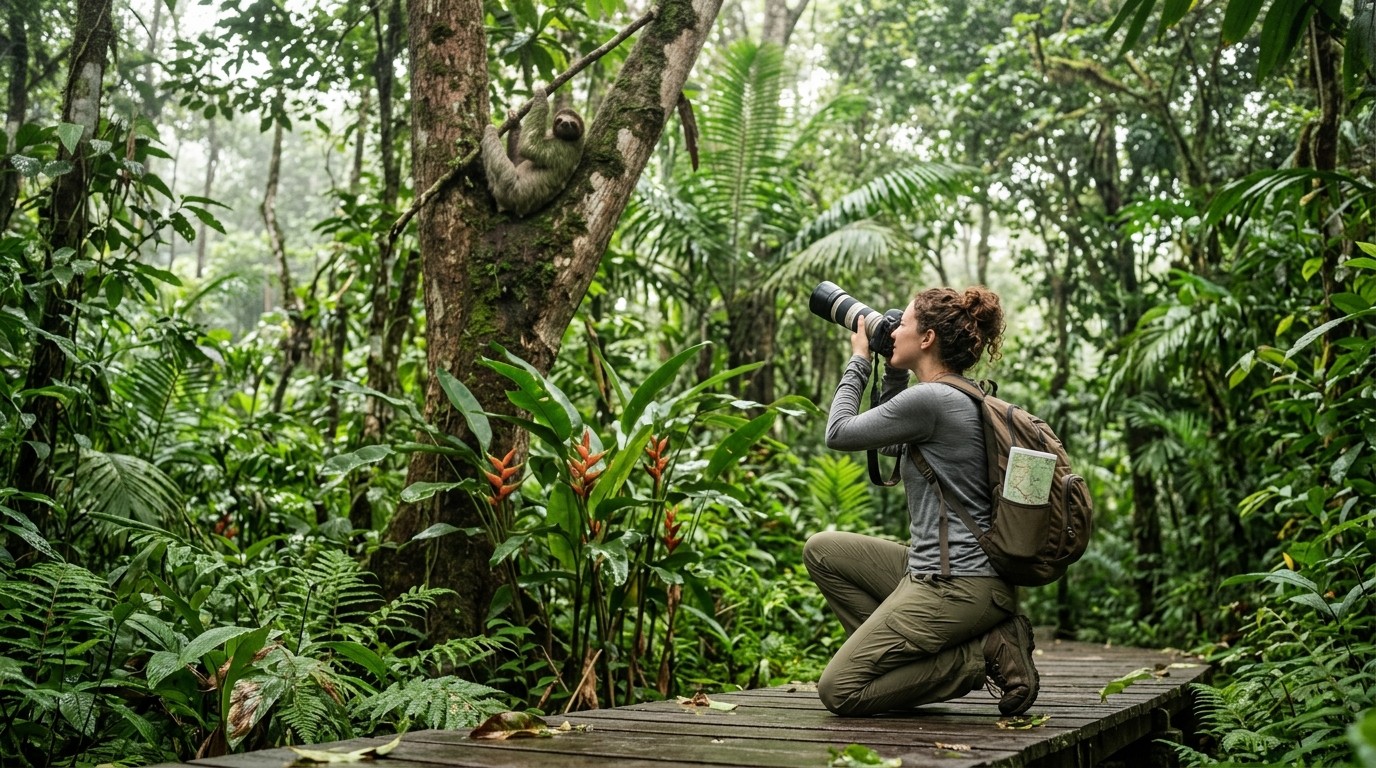
Costa Rica Solo Nature Travel should always respect the animals and habitats that make the trip worthwhile. Stay on marked trails, keep distance from wildlife, and never feed animals for photos. Use naturalist guides where possible because good guides improve both safety and understanding. They help you see camouflaged creatures, explain ecological relationships, and keep you from making avoidable mistakes.
This is also where small choices matter. Refill your bottle instead of buying extra plastic. Choose properties that support conservation. Use sunscreen and insect repellent responsibly near water. Travel slowly enough to notice what is happening around you. Responsible habits make the trip better, not just safer.
Best season and weather strategy
Costa Rica Solo Nature Travel can work year-round, but the experience changes by region and season. In general, the dry season brings easier transport and more sunshine, while the green season offers heavier rain, lush scenery, and fewer crowds. The “best” time depends on your tolerance for wet conditions and your interest in seeing landscapes at their most vibrant.
Dry season advantages
Roads are easier. Trails are drier. Ocean conditions are often more predictable. This can be ideal if you are new to solo travel and want lower friction. Costa Rica Solo Nature Travel during dry months can feel more relaxed because logistics become simpler.
Green season advantages
The forests look more alive. Waterfalls can be stronger. Crowds may thin out. Some travelers actually prefer the greener months because the country feels more intimate and less tour-driven. If you do not mind rain, Costa Rica Solo Nature Travel during this period can feel richer and more cinematic.
Sample 9-day solo nature route
Day 1 and 2: Arrive in San José, transfer to La Fortuna, settle in, and take a light hike or hot spring evening.
Day 3: Explore Arenal viewpoints, hanging bridges, and a wildlife walk.
Day 4 and 5: Move to Monteverde for cloud forest trails, birding, and a slower mountain pace.
Day 6: Transfer toward the Caribbean side or a central rest stop, depending on your energy.
Day 7 and 8: Enjoy Cahuita, Puerto Viejo, or Tortuguero based on your preferred vibe.
Day 9: Return to San José or continue south if your schedule allows.
This route works because it mixes easy access with deeper immersion. Costa Rica Solo Nature Travel becomes more satisfying when you avoid overpacking your itinerary. Nature trips are not supposed to feel like a race.
Budgeting without killing the experience
You can travel this country in different price ranges. Solo travelers often spend more per person on lodging, so it helps to balance splurge nights with simpler stays. Cooking a few meals, using shared shuttles, and choosing two or three strong nature bases instead of many short stops can stretch your budget. Costa Rica Solo Nature Travel is often worth the expense because the quality of the natural experience is high, but smart pacing still matters.
Where to save and where to spend
Save on unnecessary transport hops and impulse tours. Spend on guide-led wildlife experiences, especially in places where a trained eye dramatically improves your day. It is better to do fewer meaningful activities than many rushed ones. That principle fits Costa Rica Solo Nature Travel perfectly.
Social energy versus quiet
Some solo travelers want new friends, while others want to disappear into the landscape for a while. Costa Rica supports both moods. Hostels and tours can give you connection, while eco-lodges and more remote reserves can give you quiet. Your trip becomes better when you admit which mood you actually need. Costa Rica Solo Nature Travel is not only about seeing places; it is also about regulating your own energy.
When you want a tougher adventure
For people who already enjoy remote trekking or isolated landscapes, Costa Rica Solo Nature Travel can be pushed toward more demanding routes, especially in peninsula and rainforest settings. This is where planning matters most. Trails may be longer, weather less predictable, and services more limited. But the reward is a sense of earned discovery. If your favorite style leans toward Extreme Wilderness Travel, choose the regions where the journey feels intentionally wild, not just scenic.
Comparing with other solo travel styles
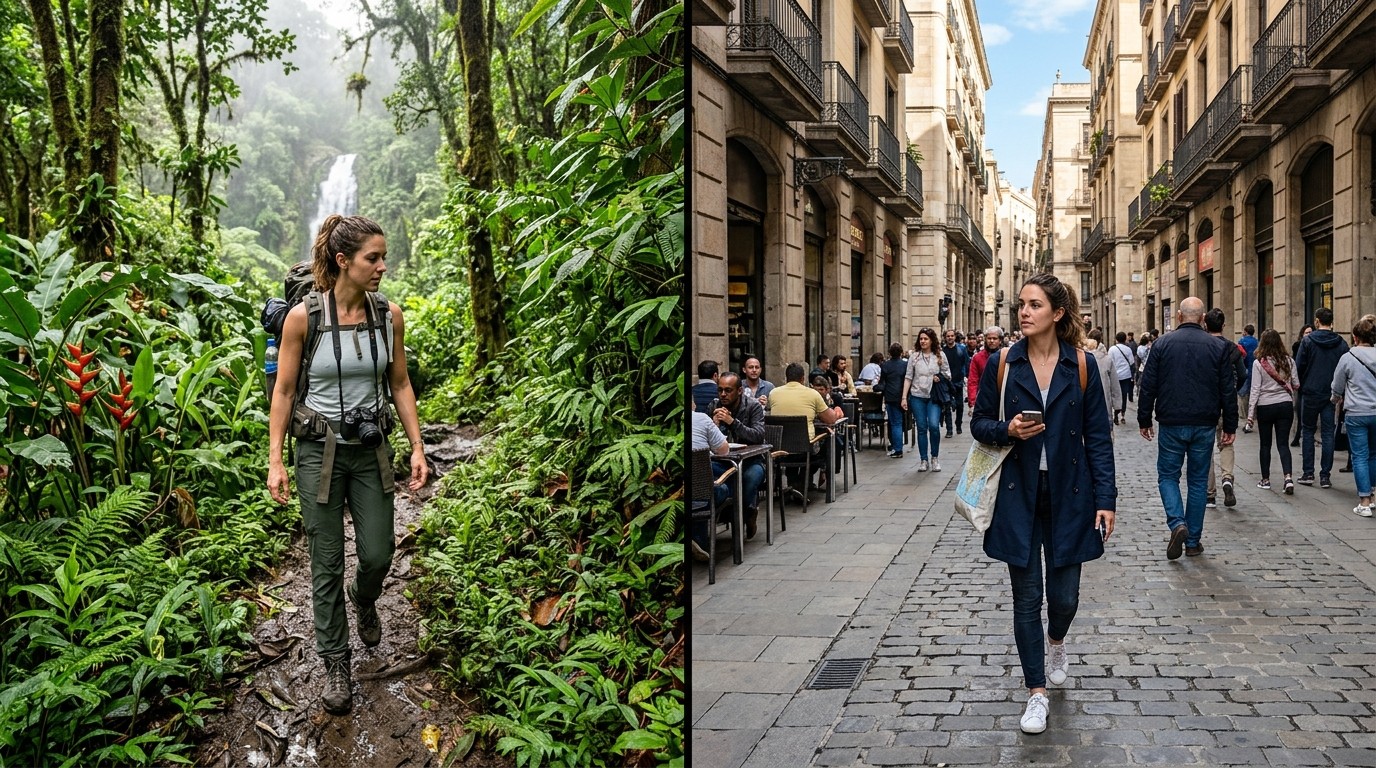
A trip like Solo Travel Thailand Escape often feels more urban, beach-oriented, and social. Costa Rica, by contrast, feels more ecological and trail-focused. That difference helps you choose the right destination based on what you actually want to feel on the road. If you want temples, city movement, and island hopping, Thailand may be your better match. If you want forests, volcanoes, and wildlife-first planning, Costa Rica is stronger. Costa Rica Solo Nature Travel is especially satisfying when your goal is immersion rather than constant movement.
For travelers who also think about logistics before destination choice, Remote Trip Planning becomes the real skill. The best nature trips are not built on wishful thinking. They are built on transport timing, weather awareness, and realistic daily distances. Costa Rica rewards careful planning because the country is compact but varied, and the landscape can change fast from one region to another.
If you have recently enjoyed Bali Solo Travel, you may notice that Costa Rica feels a little more nature-forward and less centered on beach-town nightlife. That difference can be refreshing if your goal is deeper observation. Costa Rica Solo Nature Travel often feels calmer and more ecological, which helps solo travelers slow down without feeling disconnected.
Practical planning checklist
- Book arrival transfers in advance.
- Reserve nature lodges early during busy months.
- Keep one flexible day for weather shifts.
- Use a combination of shuttle, short taxi rides, and walking.
- Choose one major wildlife goal per region.
- Leave space for slow mornings.
This checklist matters because Costa Rica Solo Nature Travel can become either deeply rewarding or unnecessarily tiring depending on how tightly you schedule it. The more you protect your energy, the more you notice the natural world.
Why these wild places leave a lasting impression
The strongest destinations are not always the ones with the biggest names. They are the ones that change the way you move, listen, and pay attention. Monteverde makes you notice mist and birds. Tortuguero teaches stillness. Arenal offers a mix of comfort and adventure. Corcovado demands respect. Cahuita softens your pace. Rincon de la Vieja brings geothermal intensity. Together they show that Costa Rica Solo Nature Travel is less about ticking boxes and more about learning how to travel at nature’s speed.
Final thoughts before the conclusion
There is a reason many solo travelers return from this country feeling calmer and more alert at the same time. The landscapes are beautiful, but the real value comes from the structure behind them: accessible trails, knowledgeable guides, and enough variety to match different personalities. Costa Rica Solo Nature Travel succeeds because it does not force one version of adventure. It gives you options, then asks you to choose consciously.
Costa Rica Solo Nature Travel rewards patience.
Costa Rica Solo Nature Travel feels intentional.
Conclusion
Costa Rica Solo Nature Travel is one of the best ways to experience wild landscapes without giving up safety, comfort, or flexibility. The country’s cloud forests, volcano regions, waterways, and coastal reserves make it possible to design a trip that feels personal rather than packaged. Whether you are drawn to misty trails, river journeys, jungle wildlife, or rugged wilderness, the country has a region that fits your pace. The smartest solo travelers move slowly, book thoughtfully, and respect the natural environments they come to see. When you do that, the journey becomes more than a vacation. It becomes a memory built from silence, movement, and awe.
Frequently Asked Questions (FAQ)
1. Is Costa Rica good for first-time solo travelers?
Yes. Costa Rica Solo Nature Travel is beginner-friendly because many regions have established tourism infrastructure, organized tours, and easy access to nature-based activities.
2. Which area is best for wildlife watching?
Corcovado is often the strongest for raw biodiversity, while Tortuguero and Monteverde are also excellent for different kinds of wildlife experiences.
3. Do I need a guide for every hike?
Not for every hike, but guides are very helpful in wildlife-rich areas because they improve safety and help you spot hidden animals.
4. Is it safe to travel alone in nature areas?
Most solo travelers manage well with common-sense precautions, daylight travel, and planned lodging. Costa Rica Solo Nature Travel is best when you avoid unnecessary risk and stay alert.
5. What should I pack for forest and rain?
A rain jacket, sturdy shoes, insect repellent, quick-dry clothing, a headlamp, and a water bottle are the basics. Binoculars are a bonus.
6. Can I do Costa Rica on a budget?
Yes, but smart choices matter. Use shared transport, limit short hops, and focus spending on the most valuable experiences.
7. What is the best season for solo travel?
Dry season is easier for logistics, while green season offers deeper color and fewer crowds. Both can work well.
8. Which places are best for quiet travelers?
Tortuguero, Monteverde, and some parts of the Osa Peninsula suit travelers who want a slower, quieter pace.
9. Which places are best for active adventure?
Rincon de la Vieja, Arenal, and Corcovado offer stronger adventure energy, with trails and terrain that feel more challenging.
10. How many places should I include in one trip?
Three to five strong bases are enough for most solo nature itineraries. That keeps the trip rich without making it exhausting.



Leave a Reply